Featured Post

U motenya!

I leave my house for work and get called over by two village women awaiting their chance to do business with the chief. The first smiles...

Showing posts with label Sesotho. Show all posts

Saturday, May 26, 2018

Note to Self: Peace Corps Lesotho Edition

I recently saw an interview of Gayle King on The Daily Show about her new book, Note to Self: Inspiring Words from Inspiring People. The book is based on letters to a younger self that people, mostly celebrities, have been asked to write. I was inspired to use the concept to reflect on my own growth and experience living abroad in Lesotho as a Peace Corps Volunteer for the last four years. So here goes:

Dear 2014 Beth, 

You are about to embark on an incredible experience. Stop worrying about what you are going to pack and stop wasting money on clothes to last you for the next two years. They literally sell clothes on the street in Lesotho. Do not fret about the investment in quality footwear though, you will wear out four pairs of shoes in the next few years. Also, the solar panel is a brilliant investment.

Instead, keep doing what you are doing. Maximize your time making memories with family and friends before you go. Invest in them as those relationships will sustain you through more than you imagine in the next few years. You are about to experience more happiness and pain than you knew was possible.

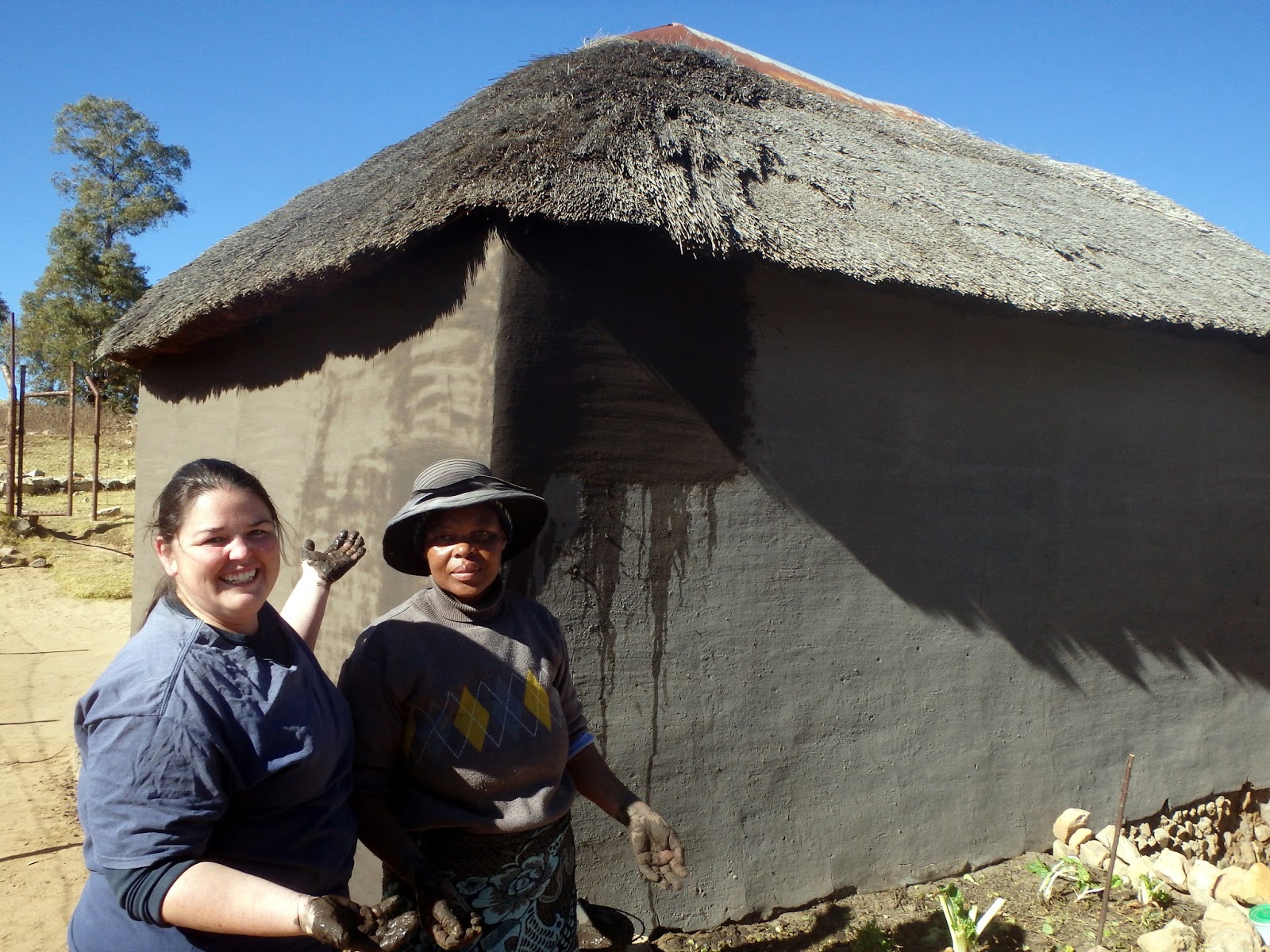
Just a typical day in Ha Rasekila at work with the
women in the community group.
You are worried about loneliness, feeling like an outsider, and isolation. You are going to let this fear motivate you through long language lessons. Even after you have a passable command of Sesotho, keep studying and learning. You will never regret taking the time to learn and practice the language. It is one of the greatest ways to show respect, bond with people, and to be professionally effective.

When you finish training and it is time to buy things for your new home, please buy the kitchen table you dream of. Do not let anxiety about surviving on the small Peace Corps living stipend keep you from this splurge. You will want that table for longer than you initially plan to be in Lesotho.

People will wonder at how you live without running water or electricity. In reality, going without those things is not what makes Peace Corps challenging. Spending money on data for Whatsapp calling and voice notes is always worth it. This is not a travel adventure. You will spend twice as long removed from your American family and friends as anticipated. Maintaining those relationships is worth the absurdly small investment in data bundles.

Remembering to stop and enjoy the goofy moments of life
with my great friend Luwi. 
Despite all the warnings in mandated Peace Corps security sessions, most Basotho are only interested in talking to you and welcoming you. Do not be stupid about your safety, but do not close yourself off either.

You will be in Lesotho a long time. In the end, your closest friends and supporters will be the host country nationals you get to know. Invest more time and energy in those relationships sooner instead of in the comfort of American peers.

Drinking Ricoffee (instant chicory root coffee) for the first six months is not worth the savings. Stock up on filter coffee that one time you shop in the capital. It is not integration to deprive yourself of this small luxury.

Take more photos of the everyday moments of your life and fewer photos at events. Some day you will return home and want to share the mundane aspects of life with people.

Trips home to visit family and friends are always worth the travel time, jet lag, and money. You will get to meet your infant goddaughter, see your ailing father, and keep relationships strong even after you decide to double down your PC service. Learn from the Basotho culture and put people first when your friend calls to announce and celebrate her engagement, promise to attend the wedding right then instead of changing your mind six weeks before the wedding.

Your house will be your comfort zone and break from the challenges of living in a foreign language and culture, but get outside of it! Walk around the community and greet people, go to community meetings and events, do your chores outside. Loneliness is of your own making. There are a ton of people just outside your door eager to welcome and befriend you. With time, your community will become your comfort zone. After you move away, returning to see them will be the best homecoming you can imagine.

My Basotho family has been a huge part of my life and
experience. I am so blessed to have been welcomed
into their lives.
Never fail to appreciate the moments people invite you into their family or cultural traditions. Such love and welcome may come at bad times or with expectations, but it is such an incredibly unique honor.

You will spend a large part of the next four years being uncomfortable. In your first year, it will feel like a great adventure even if some days, you will lose the battle and hide in your house. Although you will gain experience and get used to a lot of things, even after four years, you will still have moments that you have no idea what is going on, what someone is telling you, or what is expected of you. That is just the reality of life in another culture. Embrace it because those uncomfortable moments often open you up to some of your greatest experiences. You are not moving around the world to be surrounded by the familiar and easy.

Right now, you have days that you question whether you are doing the right thing by moving around the world for two years. When you receive your Sesotho name from your first host family, you will be reassured that you are where you belong as they explain in great depth that your new name means "God's will." You will question everything again during your first extension when you are blindsided by incredible loss and, ultimately, you will recognize that every step of your life's journey was leading you to Lesotho.

With the two men who have had the greatest
influence and impact on my life in Lesotho. 
In the next four years, you will develop such strong bonds with new friends and family members that you will question how you survived over thirty years without these people in your life. You will spend more time alone. You will learn just how much American culture influences your own thoughts and reactions to the world around you. You will fall in love with so many aspects of Basotho culture and with so many people.

In four years, when it is finally time to return to America, you find yourself right back where you are right now. You will wonder if leaving home and going to the US is really right path for your life. Have faith. In another four years, you can write yourself an updated version of this letter. It will, undoubtedly, be full of reassurances and growth. Until then, embrace people and experiences. Make the most of every moment.

With love,
               Thato, 2018

Thursday, September 15, 2016

Three Photo Thursday: 15 September

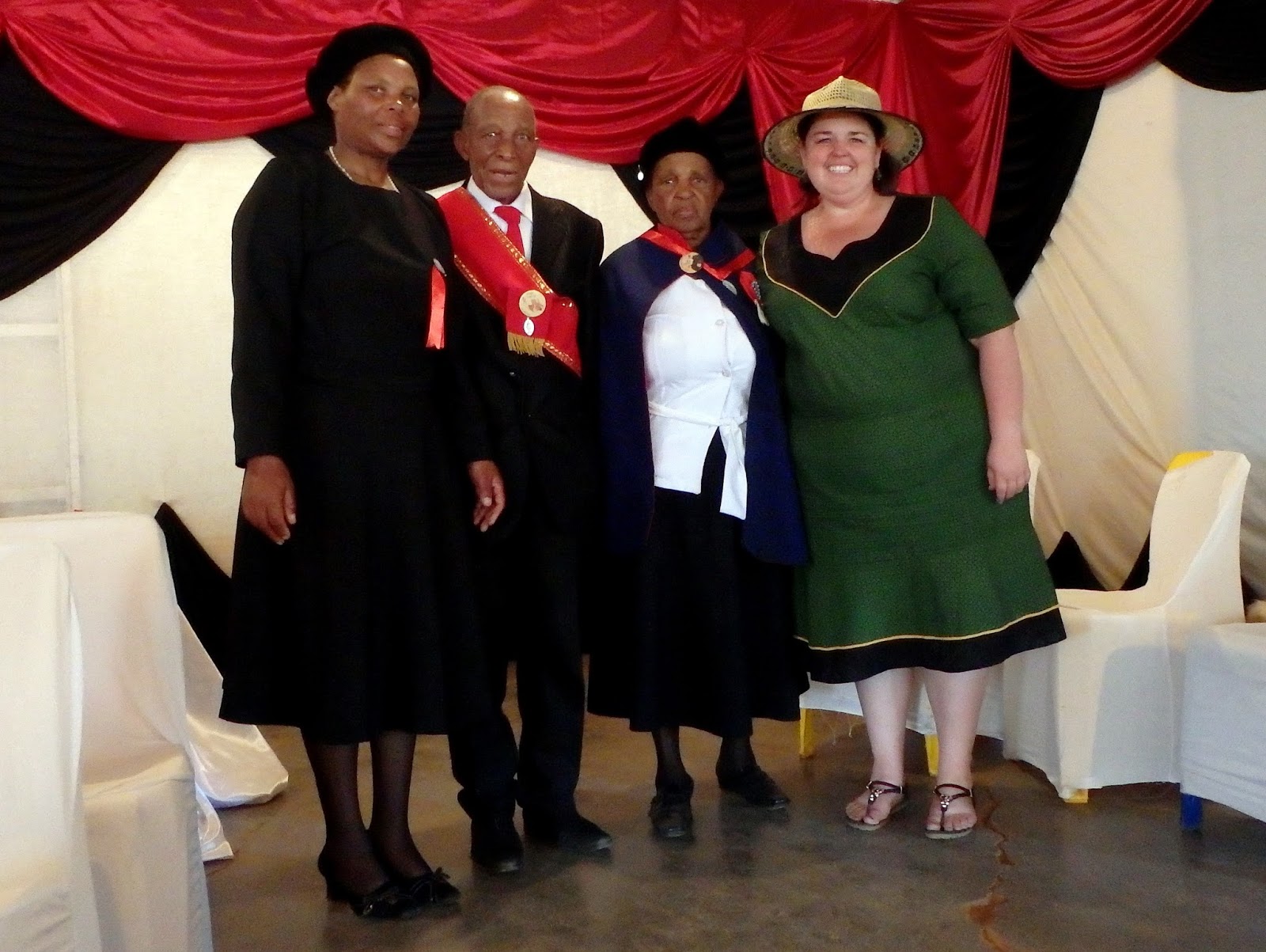
My host mother, grandfather, grandmother, and me after
church on Sunday. 
Church in Lesotho is no one-hour commitment. Although not Roman Catholic, when I attend church, I attend with my villagers, which typically means attending the small church at our local Catholic primary school.

This Sunday, however, took more initiative. Instead of attending church a ten minute walk away, we were headed to the large church an hour's taxi ride away...and the priest would be there. We were attending because my host mother was joining a group in the church named for St. Cecilia; the patron Saint of music.

Instead of the usual two to three hours of church, it lasted nearly five hours. After church, I learned most people bring lunch. Thankfully I had coffee and water to share as my grandparents shared their packed lunch with me.


A pamphlet given out
by police at a traffic stop
Police checkpoints are a regular part of car travel in Lesotho. The police check out the vehicle safety, the driver's license, the vehicle registration, or confirm that a taxi is not overloaded.

This week, as we pulled up to the usual checkpoint in Botha Bothe, a policewoman handed a pile of papers to the driver. After the last one made it to me in the back of the taxi, I was impressed to see this double-sided pamphlet about human trafficking. With the opposite side in Sesotho, the handout told people where to get help and how to avoid becoming a victim of trafficking. I had previously seen similar posters , but giving the information out to captive audiences in cars is brilliant.

It reminded how seriously the Lesotho Police take human trafficking. Last year as we were finalizing things for Camp GLOW, the police requested to come to the camp specifically to talk about human trafficking and how to avoid becoming a victim.


Peach Blossoms
After last week's Plum Blossoms, I almost did not share these beautiful pink flowers. They are simply too beautiful to not share.

Right now in Lesotho, peach blossoms are a bright and colorful sign that summer is coming. Since the rains have not yet begun, the rest of our landscape is still mostly shades of brown and sepia; which only makes the thousands of trees bursting with pink stand out that much more.

They are like our reward for wearing long underwear inside and out for most of July and August. Now, we get to complain that the sun is too hot while absorbing this beauty. 

Tuesday, August 23, 2016

Chicken Coop Construction: Weeks 5 and 6


Construction Completed!!
Week Five: We have completion! Well, construction completion anyway. Although the house is not yet ready for chickens to arrive, the roof is completed and well secured for its windy locale. Although I missed watching the team finish the house, I learned of their accomplishment before boarding my taxi to come home. Multiple people in town stopped me in my tracks; thrilled me to tell me that the chicken house was done and beautiful.

As my taxi crested the hill before our building site, I caught me breath eager to see the completed project. It looks wonderful!

Week Six: When week five started, a friend helped me schedule someone to install burglar bars in the house on Sunday of week six. In my head, with burglar proofing happening Sunday, the cages would also get installed this week.

Clearly I should not develop expectations, even when things are scheduled and we have asked a million clarifying questions in two languages.

When the man building and installing our burglar proofing arrived, we were all stunned. He was shocked to learn we do not have electricity in our village. Bo-‘M’e and I were equally blown away that he never mentioned needing electricity to complete his work.

As PCVs, we are supposed to work with host country nationals in all things. This is to build their capacity to do the work after we return home. In this case, I am grateful to have worked alongside women in my organization as otherwise I would have feared my language skills caused the confusion and delay.

Still waiting for burglar bars on these windows, but wow,
that roof is pretty!
One of the leaders in my organization and I had spoken to this man twice in person. The first time was when we were getting a quote for building supplies and pricing. He looked at the printed list of supplies and said we had everything we needed listed and priced his work. The second time we spoke was on the day that we bought the building supplies. Again, we checked to ensure we had everything as we did not want to have to hire a vehicle for later deliveries of building supplies. Again, he confirmed we had everything and he gave us his contact information.

I have an incredibly hard time understanding this man’s Sesotho, so it is possible that I would have missed any mention of electricity despite knowing the word. I was, however, working alongside ‘M’e ‘Majustice and a woman from the building supply store. ‘M’e ‘Majustice knows that we do not have electricity in our villages. She would have quickly jumped in had he suggested anything connected to moltakasa or use of a generator. I do understand her Sesotho. The woman from the store translated many of his words into English for me and I am certain this important fact would not have been ignored as much of our district does not have electricity.

As a result of this miscommunication, we spent two hours trying to find a generator for the following week. His job at the building supply store makes him only available to do the work on Sundays. He made it clear that we needed a large generator. When he looked at the first one we found, it was too small. We went to another family’s home to see their larger generator. Although larger than the first, it too was too small. Then he clarified the power of the generator we needed-double the first one we had looked at. As we walked back to my supervisor’s, I expressed concern that we may be unable to find one that large as our village does not have people rich enough to have such large generators and we do not have the money to rent one from somewhere else.

Before he departed for the day, I asked him to take a look at our supplies again, just to be sure that if and when he returns we actually have everything needed to do the job in one day. It turns out that we are missing square “tubing” to serve as the outside of the burglar door frame. We need to buy two sections. Apparently, checking the list when we were at the building supply store on two separate occasions did not highlight this important missing piece. Buying these now will require hiring a truck as they are too long to strap to the top of our taxis.
One of the women in my organization poses with the
completed chicken house before our meeting.

So now we have to figure out how to find a huge generator, buy oil and petrol for it, buy the two sections of square tubing, and hire a vehicle to deliver the tubing or we have to find a new person to do the work; one who can arrive with and by his own power. This lack of clarity looks to more than double the anticipated cost of burglar proofing the chicken house in addition to slowing us down.

Despite my frustrations with the man who was to do the work, I am surprisingly unfazed by the situation. Obviously, my expectations are shifting and I am becoming more accepting of the twists and turns in the project.

Bo-‘M’e and I visit numerous houses in multiple villages trying to secure a generator large enough for the project. We are unsuccessful, however, my visit to town to get new quotes from people with larger shops gets us a few reasonable quotes that come complete with transport, installation (including bringing their own generator), and the supplies. As predicted things will be twice what we estimated, but a careful look over the budget and remaining funds reassures me we can still afford this vital step in our project. 


MCCC’s Egg Laying Chicken Project has been in development since March 2015. After many delays, MCCC and I were able to write a successful grant proposal for a VAST grant through Peace Corps. VAST grants are funded by PEPFAR to help with HIV-related work and OVC (Orphan and Vulnerable Children) care. It is due to MCCC’s work with OCVs that qualified us for the VAST grant. Otherwise, we would have applied for a PCPP [Peace Corps Partnership Program] grant and would have been asking for assistance in funding this grant proposal. I encourage you to consider supporting other PCPP projects.

Posts about this project include:

Tuesday, August 02, 2016

Learning Language

Attempting to look confused, I stared at the woman in front of me. “Huh?” I said before turning to the two people sitting next to me for help.

The woman in front of me repeated her question, “U roabetse joang?” I continued to look perplexed as I slowly repeated after her, as if trying to remember what the words meant.

Finally, the person to my left whispered to me, “She wants to know how you slept.”

“Oh!” I exclaimed. “Good, um, hantle ‘M’e!

Although I have known and regularly used these common Sesotho words for over two years, as the American “student” at the LCF [Language and Culture Facilitator] Training last week, my job was to be a new arrival to Lesotho.

Each new LCF took a turn teaching three of us for twenty minutes on topics ranging from simple sentence construction, vocabulary in the kitchen or at the shop, and the future tense. Most of the brand new LCFs were surprisingly good at teaching their topic; however, almost all struggled to not include longer complex sentences in rapid Sesotho as filler in their sessions. I found this entertaining, as I usually understood them, but needed to don a blank, perplexed, or dejected face the way a new trainee would. Obviously, when one is just learning to introduce oneself in Sesotho, complex sentences are too advanced!

After two years living and working in predominantly Sesotho, acting like a new trainee was like time travel. Much the way we forget there was a point we did not know how to read or write, I had forgotten how overwhelming the process of learning the language had been during the early stages of Pre-Service Training.

As new trainees, we had not even been in the country for a single meal before we walked away from our peers and LCFs, following a new host mother to her home. My host mother and sister tried to explain some things to me, but neither spoke English. A short afternoon session may have taught me to say hello and goodbye, but mostly explained, in English, some critical safety information.

That night, I ate dinner surrounded by my new family. Although my host father and the older sister both spoke English, they had been trained to speak mostly Sesotho to me. As I had my first meal of papa and greens, I listened to them talk around me wondering how I would possibly be able to understand them.

The next day, we began our routine of language classes every morning. Despite the skill of our LCFs, I remember many times when they would say something and we trainees would look at each other confused and lost.  

Today, I am confident enough in the language, that even when I do not understand someone, I am able to get clarification in Sesotho instead of English. I credit a huge part of this to my LCFs. Their slow, intentional repetition and immersion-based teaching gave me experience with being uncomfortable or uncertain while still using the language. They gave me a solid base of comprehension that allowed me to walk into a workplace where only one person spoke English and still find ways to accomplish things without relying on translations. Although I continued to study independently and with a tutor, it was the success of the language program during Pre-Service Training that allowed me to do so.

In this video, 'M'e 'Mampho, who was actually my LCF during PST, demonstrates how to teach trainees using no English and very few extra Sesotho words while teaching a lesson on public transportation. How much are you able to understand?

Friday, July 01, 2016

Ho Lila: Basotho Home Maintenance

It is early on a cold Sunday morning. Unlike most women in our community, my host mother and I are not getting ready for church, doing laundry, nor warming ourselves in the sunlight.

Instead of the usual Sunday morning activities, we are using our hands to mix mobu (mow-boo). My As we mix it, my mother explains in Sesotho that today our mobu is a combination of makaka a likhomo or cow dung and water.

Once the chunks are crushed and the mobu is well mixed, she climbs up on a bench and begins smearing it in large sections on the outside of my house.

My house, a heise (hay-see), is the rectangular variety of traditional Basotho dwellings. It is made of rocks and cow dung with a grass roof. This makes it well insulated against the winter's chill and the summer's heat. It also means that every year or so, it requires another layer of mobu to keep it from decomposing.

We have not added any mobu since I moved in two years ago and the cracks that develop as the house bakes in the sun are a sign that it is definitely time for a fresh layer.

She demonstrates the process for me by first smearing a thick layer of dung in a square section at the highest corner of the wall. Once coated, she sprinkles water on the section and uses her hand to smooth it out. She explains that using thin, smooth coats of mobu is considered a fine finish. Others put on a thick layer and they use their fingers to create designs, however, "rough" layers do not last as long as fine layers.

To offset the cold temperatures and cold mobu, we are using heated water. Our fingers appreciate the difference.

Once the first tema (tay-ma or section is complete, she climbs off the bench and demonstrates on the section just below it. After it is complete, she lets me try on the lowest section. When it is time to smooth the mobu, she shows me how to blend the edges between her section and mine so that the finished product will be smooth.

Again, she does the upper two sections and I do the lowest one. As we begin the third column, I offer to start on the middle section after she completes the upper one, however, she instructs me to wait and do the bottom. Without her saying so, I realize that as the beginner, I am doing the least noticeable sections so that when people visit the Chief, they will not think that we lila (dee-lah) poorly.

As we round the first corner of the house, my mother tells me I can do the middle or eye level sections. Despite having only done four sections in my entire life, I feel a great sense of accomplishment at this achievement. After each section, my mother tells me my work is beautiful.

We talk as we work. She tells me that girls in Lesotho all learn how to lila from their mothers so that they are prepared to do it when they marry. There is no way to know if a girl will marry someone with a traditional house, so it is important that all girls know how to maintain them. She laments the loss of culture that comes from girls being raised in town and therefore not learning how to lila, asking what kinds of wives those girls will be if their husband is from a rural place. She celebrates that I am eager to learn and I cannot help but think about how difficult it must be for this incredible woman to have only sons and therefore have no one to teach the traditions to.

Soon, my host mother is teaching me how to use the harder, drier mobu for patchwork around the bottom of the house. The lowest part of the house has rocks stuck in the mobu to help prevent rain and mice from damaging it. Last year, our pig created a game of trying to loosen the rocks around the bottom of my house, so there are a few spots that need big patches made.

It is the middle of the afternoon by the time we complete the third side of the house. The fourth side is for another day as it is a different color. My mother explains that she will use makaka a lidonki le lipere or donkey and horse dung to make that mobu; which is how it gets a nice orange color instead of the gray we have been using.

She shows me how the window and door frames are done. They are much trickier, so I am reduced to being an observer. As she does them, she explains that it is a much slower job to lila inside the house. It requires moving furniture and far more work at keeping things perfectly smooth. We are not doing that right now, as it is painted and gets damaged by the sun far less. I do ask her if the process for patching is the same and consequently learn how to fill in the mouse home made last year.

We begin cleaning up. I am, as usual, impressed at her ability to be elbow deep in dung all day without getting particularly dirty. While mobu was dropping the entire time we worked, her feet and pants are mostly clean. I, as usual, am not.

Before we finish, I thank my mother for showing me this traditional method and letting me help her. I am sure that teaching a beginner has slowed her down. She, on the other hand, thanks me profusely for helping her. She tells me she would not have finished until six or so without my help. I am grateful that my joining her for this unique experience has actually been helpful.

More on homes in Lesotho can be found in Constructing Dreams, Thatch to Patch, and Heise Sweet Heise.

Tuesday, June 21, 2016

Failure to Adapt: 4 Cultural Things that Challenge Me

After more than two years in Lesotho, there are many aspects of Basotho culture that have become a part of my own identity and tradition. I absolutely love living here, as evidenced by the procrastination of My Peace Corps Service Conclusion. There are, however, times that the American inside me struggles with specific cultural norms...even when I understand them...even when I know where they originate from...even when I respect the. Here are a few norms in Lesotho that are so vastly different from my own past that I simply cannot seem to overcome them:

Here my Grade 6 Life Skills students sing for me, but
they have also insisted I stop teaching to answer my phone
when I forgot to turn the ringer off before class.
1. Interrupt Please!
I know and understand this. I do not take offense when someone interrupts our conversation for a ringing phone or to greet someone passing by. At the same time, every time I walk by a friend engrossed in a conversation, I have an internal battle between being a rude American and butting in with a greeting or being a rude Mosotho and walking by without saying hello. Every time I have to force myself to choose Basotho culture and interrupt with pleasantries. Every time.

2. Just Ask
As I explained in Motho Ke Motho Ka Batho, the cultural belief in Lesotho is that people are here to help one another. As a result, it is completely acceptable and even encouraged to ask people for what you need or want. Out of matches or salt, pop next door and ask for some. Need something from town and a neighbor is going, just ask. Hungry or thirsty after a long walk to another village, just pop into a random home and ask for food or drink. Traveling but not reaching your destination in a rural village before nightfall, just ask for a place to sleep.  The generosity and caring people show for one another is one of the most beautiful things about Basotho culture and tradition.

In America, however, we are staunchly independent. If we can do it ourselves, we should and do…especially in northern New England. Our Yankee Pride means we can barely accept help when it is offered and we never ask for it. When I first arrived in Lesotho, I struggled with people asking me for things. When people arrived at the Chief’s place, tired and thirsty from travel, I bristled that they felt it acceptable ask me for a glass of water when getting water requires work. I finally adapted and am comfortable sharing things as small as matches, salt, or water. I still struggle if someone asks me for food as I cook only enough for myself. And no matter how hungry or thirsty I get, I never ask for things.


This man insisted on a photo with me before assuring
me that he would be an excellent husband. 
3. Wife Up 
As I mentioned in Love and Marriage and My New Approach to Proposalsa  Mosotho man shows he is respectful and serious about a relationship by starting relationship conversations be bringing up marriage. Almost any time I am outside of my village, some man will say he wants to marry me or he will be my husband. Although I know that this is the polite opening to flirtation, the absurdly independent single woman inside me runs the other direction every time an offer or suggestion of marriage is made. I simply cannot start conversing casually with a man who suggests marriage before asking my name or knowing that I even understand the language he is speaking. 

4. Or at least Dial Up
A more modern version of opening with marriage proposals is to simply insist a woman give her phone number. I have seen men literally hang out of a taxi window and shout, "Give me your numbers baby!" More surprising to American me is that I have also seen women respond by giving the man her number! Once again, if someone starts with something big like a number instead of my name or a casual compliment, I simply cannot deal. I check out of the conversation, my smile becomes fake, and I internally role my eyes. It does not matter that I know this is the norm in Lesotho, I simply cannot wrap my brain around it and I will not be giving my digits this way.  


Friday, June 17, 2016

Blanket Wearing Weather


Winter in Lesotho means it is time for wearing blankets. Actually, Basotho wear blankets throughout the year, however, the blanket game is stepped up in the winter.

Women dressed up for our swearing-in ceremony. They are wearing seshoeshoe dresses and formal kobos.
The Kobo is a large blanket typically worn around the shoulders. Kobos play a significant role in Basotho culture. They are given as gifts at important life moments including marriage, Initiation School, and the birth of a woman's first child. Some designs and patterns have historical or cultural meaning as well. For example, the maize blanket represents fertility.

Men tie their kobo on the side, while women pin theirs in the center of the chest like a cape. For women, ensuring the lines of the kobo are even is of vital importance. Most Basotho have at least one nice kobo for dressy occasions and a number of older, well-worn ones that can be worn to stay warm on a daily basis.
The women in my organization staying warm as we work by wearing their charlies.
 The Charlie is a smaller blanket tied or pinned around the waist of a woman. Typically these are worn by married women-who are no longer to sit without sitting on a blanket and are expected to keep their core warm to ensure a healthy reproductive system. Often, however, when winter arrives, girls also wear them as they really help to keep a person warm.
 
While waiting to be weighed at the outreach clinic, this baby is staying warm despite the winter chill.
Baby Blankets are a year-round part of Basotho tradition-they are used to keep a baby on a woman’s back. In summer months, women will often use thing scarves or towels, but come winter, they utilize the same warm blankets they tie around themselves as a Charlie. Then, once the child is secured, another blanket is often put over the woman’s shoulders, cocooning the baby in warmth and protecting them from the elements. 
Women wearing all manner of blankets for a community meeting. The woman on the left has a baby under the blanket that covers her shoulders. As the sun became warm, many of the women removed their kobos from their shoulders and wrapped
them around their bodies instead.


Sunday, June 05, 2016

My Peace Corps Service Conclusion

Fresh off the plane, my training group's arrival in Lesotho
June 5, 2014
Exactly two years ago, I stepped off a small plane with 18 new friends and set foot in the country that would become my home for the next twenty-seven months. I was officially a Peace Corps Trainee.
People often ask me what my expectations were when I arrived in Lesotho. Usually this questions comes from Basotho, wondering what I expected of their beloved home. Thanks to the wonders of technology and a decent amount of travel before arriving in Lesotho, I did not develop many expectations of the country.

I did, however, have expectations about Peace Corps in general.

I expected living in a different culture, language, and country would be exhausting, strange, and constantly challenging. Some days it is, but usually, it is just life.

I expected I would constantly miss family and friends in America. I do, but I am blessed to live in a country with fairly reliable 3G cellular data and to own a small solar panel so I have been in contact with people more as a PCV than when I was sailing offshore.

I expected that both of these things would have me counting down the months, weeks, or even days until my service ended and I returned to America as a more aware, more global, and more patient version of myself. Instead, when I notice the passage of time, I do so with dread.

My training group at our recent Close of Service workshop.
With 24 of my 27 months of in country completed, it is obvious that I am nowhere near ready to leave. When I had only 12 of my 27 months completed, I knew I would not be ready to leave. When I visited friends and family in America at month 16, I warned them I might not be ready to leave.

So...as many of my training group is now counting down the 6 to 8 weeks until they finish their Peace Corps service in Lesotho, as they are saying their goodbyes and finalizing their travel, work, or graduation school plans, I am not.

Kea hana (I refuse). Ha ke batle ho tsamaea hana joale (I do not want to leave right now). Ke tla sala mo (I will stay here).

I am excited to officially announce that I will be staying in Lesotho and Peace Corps for a third year!

Instead of heading home in July or August 2016, I will be here until August 2017!

I will be serving as a PCVL or Peace Corps Volunteer Leader this year. In addition to working with my host organization, I will also work more closely with Peace Corps staff on a variety of things including training and site development.

I will stay at my beloved site in Botha Bothe for a few extra months to finish things like the chicken project and to watch my brother finish secondary school. Then, I will be moving to a new host organization, closer to Maseru and the Peace Corps office so that I am better able to do my work with Peace Corps.

Watching some of my closest friends in Lesotho move on toward their new adventures while I remain is not easy. I have not lived here without these people and I have a hard time imagining my life in Lesotho without them. But, I have an even harder time imagining what I would do if I had to leave this amazing place and these incredibly people in the next few months.

I dusted off my old yearbook skills and brought them into the new millenia for our Close of Service workshop. Check out my second ever attempt at making videos on my computer:


Wednesday, June 01, 2016

Gender: My role and work

This is the second post on a mini-series about gender in Lesotho. While it can be read as a stand alone post, it is best read following Gender: An Intro.

Finding my own role as an American woman in this world has been interesting. In my mid-thirties, I am at an age where culturally men may still be single, but women are married and reproducing. When people learn I am unmarried, they often ask how many children I have, as it is beyond comprehension that I am not at the very least being a mother at my age.

I could push this wheelbarrow with my new gas tank, but
accepting help-even from ten year old brothers-is culture.
I like to do things for myself, however, when I left Pre-Service Training, I recognized that to accomplish any work in my community, I would need to integrate. If I constantly fight to do everything for myself, that makes integration harder, so I have tried to balance my fierce self-reliance with accepting help.

When I show up at an event, I am relegated to a chair, not encouraged to jump in on cooking, serving, or washing dishes. But, my chair is not placed with the men. So, I sit with either a few grandmothers or teenage girls, being served by the women because integrated or not, I am still a guest.

Women typically do not drink beer. If they drink, it is sweet wines and ciders. I once told a female friend that I prefer beer and was told, "Oh no, you must drink like a lady."


I have tried throughout my service to open people's eyes to the gender stereotypes here in Lesotho and to challenge them to consider that women or men can do all things. Early in my service, I became a member and the eventual co-chair of Gender Equality Lesotho [GEL], a Peace Corps Committee focusing on gender equality.

Through my role with GEL, I have encouraged other volunteers to work with gender in their projects and classes. Whether it celebrating international days connected to gender like International Men's Day, International Women's Day, and the annual 16 Days of Activism Against Gender-Based Violence or hosting gender related youth activities like clubs and camps, there is a huge amount that can be done to educate on gender and help bridge the gaps in the treatment of men and women in Lesotho and around the world.

Co-directing Camp GLOW last year was a highlight in my own gender work in Lesotho. It provided not only the opportunity to help 190 young women feel empowered to and deserving of achieving their goals, but provided a conversation starter about gender for countless conversations in the months preceding and following the camp. Similarly, helping with my friend Yolanda's Camp BRO meant I had a chance to interact with fifty young men and to show that breaking gender barriers is about more than just women.


Just over a year ago, Peace Corps and First Lady Michelle Obama announced a partnership program called Let Girls Learn. The goal of this impressive initiative is to decrease the obstacles and challenges young women face in completing their education and become positive, productive members of their society. In its first year, Let Girls Learn was introduced in 13 Peace Corps countries around the world.

To raise public awareness for Let Girls Learn, the #62MillionGirls campaign was launched and even included a billboard in Times Square. People from around the world-celebrities to school girls in rural villages participated-by uploading their photo. The goal is to achieve 62 million photos to represent the 62 million girls worldwide that do not have access to education.

I followed the introduction of Let Girls Learn closely, while celebrating that there are still many barriers for women, but school-based education is not one of them. Then, Let Girls Learn announced that in its second year it would more than double its reach. With twenty-three countries added, Lesotho made the list! My understanding is that Lesotho was considered despite its high prevalence of young women in school because those same young women face an HIV infection rate of 40%. No one else in the country is more at risk of contracting HIV.

Two months ago, we learned that Peace Corps would be hosting a regional Let Girls Learn Summit for a representatives from each country to participate in. After applying, I was chosen as one of the two PCVs to attend our summit! I cannot wait to share the exciting things we discuss and learn this week with my fellow PCVs, Basotho, and you!

Friday, May 27, 2016

Gender: An Intro

Wherever I live, I seem to struggle with gender roles. I hate that I the idea of fitting into a box, of being cast in a mold and therefore being expected to behave in certain ways. Despite this, I fit many classic American gender stereotypes for women: I cook, I craft, I watch rom-coms, I nurture.

Wearing men's shorts and a men's t-shirt, I happily
toil away pouring cement for a day in the Domincan
Republic. I was the only person who poured the entire
time. Looking back, perhaps I felt I had something
to prove? Regardless, it was backbreaking work and
really fun!
I have tried to break out of the American gender expectations. I went years without owning or wearing pink...then I realized I look pretty good in pink. I went years buying only men's pants. It turns out, a woman's cut actually fits my generous hips more comfortably. I chose activities and careers that required physical activity-proving to myself and others that women are capable of physical challenges and manual labor. I loved it and the camaraderie I found with the men and especially the many women I worked with.

Over time, I realized that trying to get out of the box was an unsuccessful fight. At some point, my quiet, passive aggressive fight against genderization (hello, pink Legos? Really, come on!) meant I was doing exactly what I was trying to fight against. I was putting myself into a box to prove I could not be put into a different box. I was denying things that make up my personality while not actually demonstrating anything profound.

I stopped fighting the things about myself that fit American stereotypes and simply accepted that I am who I am. Parts of me are stereo-typically American woman. And, parts of me are stereo-typically American male. And that is fine. I do not need to change, the stereotypes do.


Then, I moved to Lesotho. 

In Lesotho, gender is even more defining than it is in America. There are male responsibilities and female responsibilities. Women cook, clean the house and yard, take care of the children, do the laundry, serve the men, fetch the water, fetch smaller sticks for cooking, weed the crops, tend the home gardens, and the like. Men take care of the animals, plant and harvest the crops, cut the trees, build the homes, and other larger tasks. While most Basotho can do anything from both lists, if someone of the appropriate gender is available to do it, doing a task that belongs to the other gender is unlikely.

The gender expectations do not stop with chores and work. Traditionally, men wear pants and women wear skirts (although in younger generations this is not seen). When a woman marries, she transitions from wearing short skirts to wearing long skirts that cover the knees. A small blanket is added around the waist and her head is covered with a hat or scarf when she leaves home. When women wear a kobo (blanket), it is pinned in the front. For men, it is tied or pinned on the side.

Women in my community sit
on the upper side of the pitso ground,
next to the Chief's office
Men sit across from the women,
alongside the Chief's fields and
corrals.
Men and women sit separately at community events. A man must stand and remove his hat to address the group. A woman may sit or stand and should keep her head covered while addressing the community. Even when men are present in smaller numbers, they generally speak more than the women.


Bo-Ntate sitting together enjoying joala at a party. The women
are around the back of the house preparing food together.
When women arrive at a party, they immediately report to the cooking area and begin helping with preparing or serving food. The men gather together-often near where the animal(s) were slaughtered or where the joala (sorghum homebrew) and wait for the women to bring things to them.

Although women's secondary and post-secondary education rates are higher, men are still employed in the professional sector at a higher rate. Additionally women are far more likely to contract HIV then men due to both physiology and culture. This aspect of the culture is explained well in the phrase: Monna ke mokopu o oa namalla which translates to men are pumpkin and should go abroad or spread out. Over time Masali ke cabbage o oa ipapa or women are cabbage and should stay home has been added to the phrase. While it may have begun more literally referring to the idea that women should tend the home while men should go out to tend the animals, hunt, and deal with warfare, today it is often used when justifying the idea of men having multiple partners.


Click through to Gender: My Work, the next installment on this mini-series on Gender in Lesotho

Monday, May 16, 2016

Cows

Cows returning from a day of grazing in Lesotho.
Many cultures like cows. Americans like beef, leather, cheese, and milk. Hindu cultures consider cows so sacred that they are never used for these things. They are simply allowed to live and do as they please.

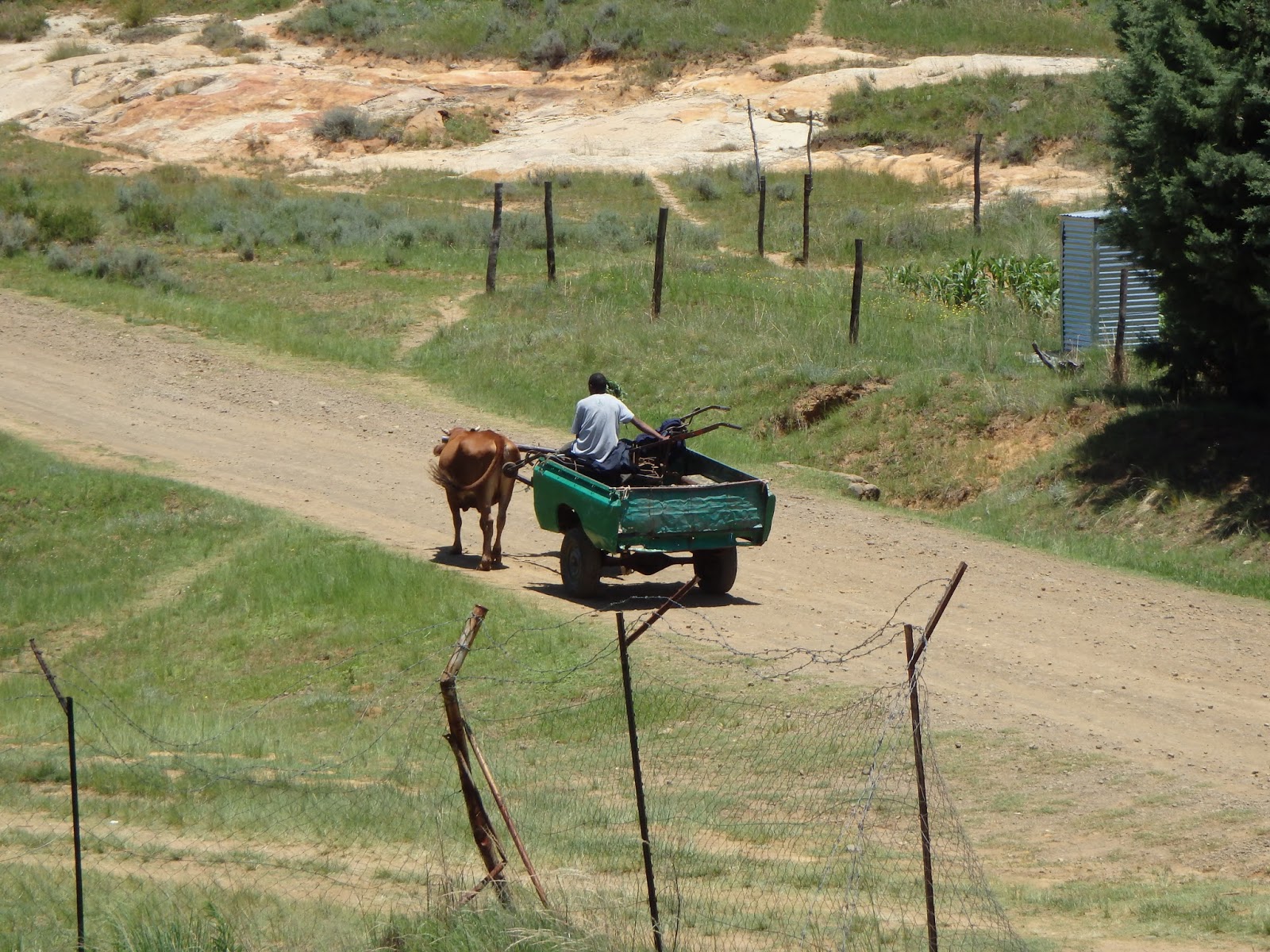
Cows or likhomo are directly equated with wealth. A family which owns cows and hires someone to be their molisana or herdboy is considered to be well off regardless of the size or style of their home or wardrobe. Cows are the most commonly used denominator for paying lebollo or the bride price. A cow is a critical part of the Basotho funeral, as a cow of the same gender must be slaughtered on the morning of the funeral; the meat serving the funeral attendees that day and the skin used in rituals completed throughout the ensuing year. Cows make men’s work easier-they are often used to pull wagons, plows, and trees.

Even the cow’s excrement is a valuable commodity in Lesotho. Cow patties are often gathered and dried to be used in lieu of firewood for cooking. The traditional Basotho huts are made of a combination of dirt, cow dung, and water.
A traditional rondeval made
from cow dung.

Cows hanging outside my
door after delivering the
harvested maize last year. 
Because of the cow’s valuable role in so many aspects of Basotho culture, many local idioms include cows. Sometimes these seem direct-a cow is a cow after all-but often the meaning is deeper with the valuable cow representing a person or people:

Khomo ke molimo o nko e metsi. A cow can do everything: in Basotho culture, cows do almost everything. Similarly, people can do most things and should do all the work.  

Khomo ke kopanya liboko. Cows join clans: This one stems from cows being used as the bride price before a bride moved from her own family and clan into that of her new husband.

My supervisor was
thrilled to show off this
newborn calf.
Khomo ha e ke e nye bolokoe ka o fela. The cow doesn’t excrete all: For those that have spent a lot of time around cows, this is well known. In Sesotho, however, it is often used at the conclusion of a speech. The phrase implies the speaker is finished so as to not tell all or say to much.

Likhomo ha li na motloha pele. Cows don’t have a first: in this case, the idiom is expressing the idea that while some people or cows might get somewhere or accomplish something first, it is not a race so people should not compare themselves to one another.

Lepotlapotla le ja puli, lesisitheho le ja khomo. Be quick to eat the goat, slow to eat the cow: cows are more valuable and take more time to grow than goats, so by being patient and taking the time, people will achieve better and bigger things.


Cows pulling wagon in Lesotho


Tuesday, May 03, 2016

Transportation Tuesday: Moving Faster

Getting around in Lesotho without a personal car is surprisingly easy…if you have a lot of patience and even more time. Public transportation—in the form of large vans and small buses-goes almost everywhere, but the taxis make frequent stops, will not leave a population locale unless full, tend to cram as many people and supplies in as possible, and blast music at deafening volumes. Over the next month or so, I will be sharing a series of posts called Transportation Tuesday, which will highlight different aspects of transportation in Lesotho.

In case you missed the previous Transportation Tuesdays:


Three weeks ago, I traveled to Maseru during a monsoon. No, Lesotho does not have a monsoon season, but that day was rainy enough to qualify. 
The flooded donga...which had been dry the day before.
I left my house by 7:30. The thirty minute walk out of the village took an extra twenty minutes thanks to the slippery mud and flooded donga I had to traverse. I was picked up by the first taxi for the ride into town. Once in Botha Botha, I decided to take a Venture-a form of taxi that holds nine passengers. I paid my fare and hopped in. I shivered as we waited for four more passengers. When we set out, we made decent time to Maputsoe-a town not quite halfway to Maseru from my site-as we only stopped four times for passengers to get off or on.

My plan in Maputsoe was to "get a lift" or hitch to Maseru. I walked past all the taxis with their aggressive drivers and conductors trying to get me into their near empty cars to my usual hitching spot. There I stood for fifteen minutes with no one even slowing down in the rain for me. A taxi pulled up and gently encouraged me to hop in. I warned them I was in a hurry and would get out if they stopped for long but I got in. In the next major town, where taxis sometimes wait for hours, I was prepared to pitch a fit and hop out. Instead, almost as soon as we stopped, the other Maseru-bound passengers and I were shuffled onto a nearly full taxi. 

I was still wearing my raincoat, but had not put on my sweater as I wanted it to stay dry. The taxi was freezing because the driver's window was stuck open with a screwdriver in the opening to help hold it in place. As taxis usually do, we stopped and started the entire way to Maseru while I hugged the backpack on my lap pretending it provided warmth. When I reached the Maseru taxi rank, I hopped off the taxi and onto a 4+1 to go to the Peace Corps office. 

Nearly 100 Maloti and 6 hours later, I arrive at the office. 

Today, I made the same trip. It took less than the usual thirty minutes to walk out of the village because it was cold and dry. Moving faster kept me warm as I passed through the fog-filled donga. 

Nearing main road, I could see only 50 meters in any direction. I heard a taxi pass by before I reached the road. Once there, worried that the taxis might not see me. Before a taxi arrived, a car driving from Mokhotlong to Maputsoe picked me up. We cruised along, discussing the weather and my work. In no time at all, I was getting out. Because I knew the passengers were paying the driver for the ride, I handed them some cash before I left. 

I once again walked to my usual spot and in less than three minutes was in a nice SUV heading to Maseru. We made stopped only twice on our route-to pick up and drop off another PCV I saw. Throughout the ride we discussed American politics, our work, our families, and more. As we entered the city, my new friend, Ntate Tefo, asked me where I was headed and then dropped my at the office. 

Only 25 Malot and 3 hours after leaving home, I arrive. 

Hitching is a popular mode of transportation for Lesotho PCVs. While it is not encouraged by Peace Corps, it is also not against the rules. Between the time spent waiting in taxis for movement and the aggressive nature of the drivers and conductors-particularly those that drive through Maputsoe-hitching becomes the go to, especially for distance travel. 

I never hitch in and out of my community. In fact, today's lift from the main road is only the third time I have take a ride instead of a taxi into town. If a taxi had arrived first, I would have taken the taxi into town. That goes back to last week's post about befriending the taxi guys. They do not like it when they see people hitching in their area because it represents lost income. I respect them, so I ride with them. 

But when it comes to traveling out of Botha Bothe, the difference in time and money is profound. There are three major towns between BB and Maseru. That means waiting for a taxi to fill or fill again four times. That is a lot of sitting around not moving towards the final destination. It is exhausting. 

When I first came to Lesotho, other PCVs talked about hitching and I pretty much wrote it off and figured I would take public transport all the time. The American in me saw hitching as too dangerous for a woman alone-just like in the United States. But, after a few long trips and increasing comfort with the culture and language, I too found myself on the side of the road flagging down cars. 

Getting a lift is a great way to make new friends like these
two lovely ladies with their snazzy phones!
It is not just about time and money, however, hitching provides the chance to interact with professional and educated members of Basotho society. I have ridden with business owners, lawyers, doctors, a District Administrator (the top government official for a district), principals, and more. Through conversations, hitching has allowed me to help an organization apply for a new PCV, to invite the Queen to come to Camp GLOW, and to bring the women from my organization for training on keeping chickens.

The conversations with people as we travel are always interested and enlightening. Often they know more about what is happening in American news than I do. They have interesting questions and perspectives. And so while hitching saves money and saves even more time, it, like so many things in Peace Corps and in Lesotho, becomes about the people and the conversations.


A Comparison in Comfort:

Traveling from Botha Bothe to our Peace Corps training villages outside of Maseru:
Public Transport:  July 2014, Nick and I were crammed into the back of a venture facing one another with our two bags stacked across our laps. This was our first taxi. On the second, the aisle was completely full of luggage and people had tried to squish big bags in the small space overhead. One suitcase fell, landing on my head and Nick's arm.


Hitching: November 2014 with the same luggage. Behind us are empty seats and our luggage sits on the floor without taking up our leg space. Although out luggage is dripping with rain, we are completely comfortable in every way and thrilled about our speedy trip!