Featured Post

U motenya!

I leave my house for work and get called over by two village women awaiting their chance to do business with the chief. The first smiles...

Showing posts with label Peace Corps Third Goal. Show all posts

Saturday, May 26, 2018

Note to Self: Peace Corps Lesotho Edition

I recently saw an interview of Gayle King on The Daily Show about her new book, Note to Self: Inspiring Words from Inspiring People. The book is based on letters to a younger self that people, mostly celebrities, have been asked to write. I was inspired to use the concept to reflect on my own growth and experience living abroad in Lesotho as a Peace Corps Volunteer for the last four years. So here goes:

Dear 2014 Beth, 

You are about to embark on an incredible experience. Stop worrying about what you are going to pack and stop wasting money on clothes to last you for the next two years. They literally sell clothes on the street in Lesotho. Do not fret about the investment in quality footwear though, you will wear out four pairs of shoes in the next few years. Also, the solar panel is a brilliant investment.

Instead, keep doing what you are doing. Maximize your time making memories with family and friends before you go. Invest in them as those relationships will sustain you through more than you imagine in the next few years. You are about to experience more happiness and pain than you knew was possible.

Just a typical day in Ha Rasekila at work with the
women in the community group.
You are worried about loneliness, feeling like an outsider, and isolation. You are going to let this fear motivate you through long language lessons. Even after you have a passable command of Sesotho, keep studying and learning. You will never regret taking the time to learn and practice the language. It is one of the greatest ways to show respect, bond with people, and to be professionally effective.

When you finish training and it is time to buy things for your new home, please buy the kitchen table you dream of. Do not let anxiety about surviving on the small Peace Corps living stipend keep you from this splurge. You will want that table for longer than you initially plan to be in Lesotho.

People will wonder at how you live without running water or electricity. In reality, going without those things is not what makes Peace Corps challenging. Spending money on data for Whatsapp calling and voice notes is always worth it. This is not a travel adventure. You will spend twice as long removed from your American family and friends as anticipated. Maintaining those relationships is worth the absurdly small investment in data bundles.

Remembering to stop and enjoy the goofy moments of life
with my great friend Luwi. 
Despite all the warnings in mandated Peace Corps security sessions, most Basotho are only interested in talking to you and welcoming you. Do not be stupid about your safety, but do not close yourself off either.

You will be in Lesotho a long time. In the end, your closest friends and supporters will be the host country nationals you get to know. Invest more time and energy in those relationships sooner instead of in the comfort of American peers.

Drinking Ricoffee (instant chicory root coffee) for the first six months is not worth the savings. Stock up on filter coffee that one time you shop in the capital. It is not integration to deprive yourself of this small luxury.

Take more photos of the everyday moments of your life and fewer photos at events. Some day you will return home and want to share the mundane aspects of life with people.

Trips home to visit family and friends are always worth the travel time, jet lag, and money. You will get to meet your infant goddaughter, see your ailing father, and keep relationships strong even after you decide to double down your PC service. Learn from the Basotho culture and put people first when your friend calls to announce and celebrate her engagement, promise to attend the wedding right then instead of changing your mind six weeks before the wedding.

Your house will be your comfort zone and break from the challenges of living in a foreign language and culture, but get outside of it! Walk around the community and greet people, go to community meetings and events, do your chores outside. Loneliness is of your own making. There are a ton of people just outside your door eager to welcome and befriend you. With time, your community will become your comfort zone. After you move away, returning to see them will be the best homecoming you can imagine.

My Basotho family has been a huge part of my life and
experience. I am so blessed to have been welcomed
into their lives.
Never fail to appreciate the moments people invite you into their family or cultural traditions. Such love and welcome may come at bad times or with expectations, but it is such an incredibly unique honor.

You will spend a large part of the next four years being uncomfortable. In your first year, it will feel like a great adventure even if some days, you will lose the battle and hide in your house. Although you will gain experience and get used to a lot of things, even after four years, you will still have moments that you have no idea what is going on, what someone is telling you, or what is expected of you. That is just the reality of life in another culture. Embrace it because those uncomfortable moments often open you up to some of your greatest experiences. You are not moving around the world to be surrounded by the familiar and easy.

Right now, you have days that you question whether you are doing the right thing by moving around the world for two years. When you receive your Sesotho name from your first host family, you will be reassured that you are where you belong as they explain in great depth that your new name means "God's will." You will question everything again during your first extension when you are blindsided by incredible loss and, ultimately, you will recognize that every step of your life's journey was leading you to Lesotho.

With the two men who have had the greatest
influence and impact on my life in Lesotho. 
In the next four years, you will develop such strong bonds with new friends and family members that you will question how you survived over thirty years without these people in your life. You will spend more time alone. You will learn just how much American culture influences your own thoughts and reactions to the world around you. You will fall in love with so many aspects of Basotho culture and with so many people.

In four years, when it is finally time to return to America, you find yourself right back where you are right now. You will wonder if leaving home and going to the US is really right path for your life. Have faith. In another four years, you can write yourself an updated version of this letter. It will, undoubtedly, be full of reassurances and growth. Until then, embrace people and experiences. Make the most of every moment.

With love,
               Thato, 2018

Monday, April 23, 2018

Homecomings


After a long day of travel and work with herd boys, my colleagues drop me off in the rural village that Peace Corps currently uses for trainings. As I walk to my home for the night, villagers greet me by name and excitedly ask about my life and work. When I reach the house, the family comes pouring out; giving me hugs and talking over one another to welcome me home.

Over the last two years, I have lived in this village for approximately twelve weeks. I have lived with this family for only four of those weeks. Despite this, returning to such warm and personalized greetings feels like a homecoming. Somehow, my return to this village, which has never actually been my home, gives me a greater sense of belonging that the village I have been living in for nearly eighteen months.

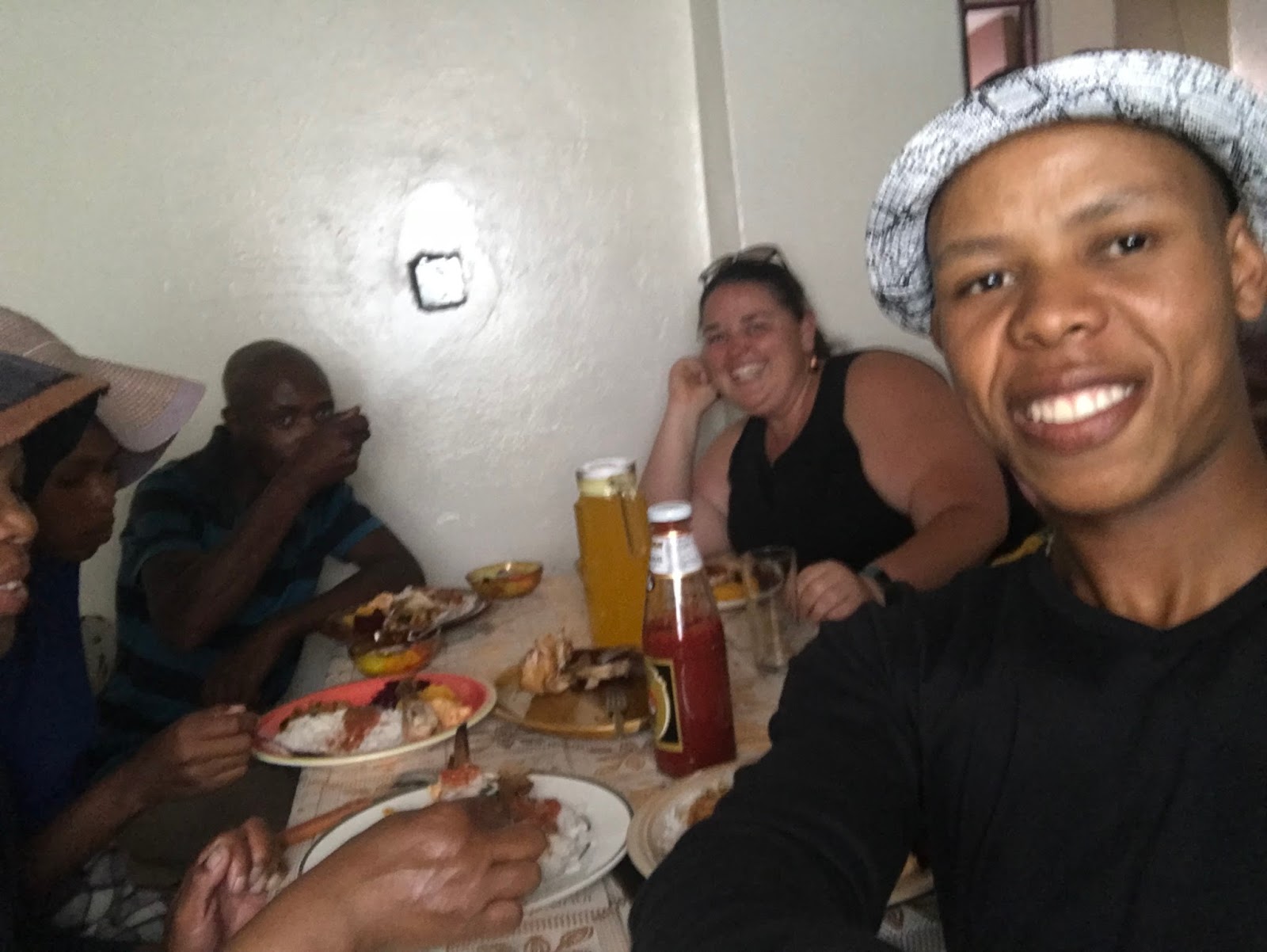
Christmas Dinner 2017 in Ha Rasekila with my Basotho Family
It reminds me of returning to Ha Rasekila for visits and holidays. After a month of challenges and feeling disconnected in my own village and community, this homecoming reminds me exactly why I fell in love with this country.

The Basotho are some of the most genuinely welcoming people. They are quick to welcome and adopt visitors-foreigner or not. One of the first statements said to a guest is always “Rea u amohela” or “We welcome you”. But the Basotho welcome is not limited to words.

When you arrive early for a wedding or a funeral, you are immediately given a plate of food to tide you over until the meal that follows the (lengthy) ceremony.

If you compliment someone’s clothing, they tell you they will give it to you.

And, when you stay somewhere for a while, they claim you as their own.

I will always cherish the moments in the taxi rank when a man would come to hit on me and my villagers would immediately shut him down, telling him “Ke morali oa rona!” or “She’s our daughter!”

As I prepare for my close of service later this year, I cannot help but think about the idea of home, belonging, and how these are defined. As I have struggled with feeling connection in my current village, it has been glaringly obvious that home is not simply the building one lives within. My rondavel is my sanctuary, but that does not provide the connection and sense of belonging that makes a home.

Home is walking into a place or community and being welcomed by people who know and love you.

Home is watching infants become toddlers and children become teenagers.
My favorite twins-they weren't walking or
talking when I first met them, but now they
are quick to talk and play and will enter
preschool next year! 

Home is knowing the paths around you so well that you can observe them changing over time.

Home is connection to people and the place.

Home is where you return to for holidays like Christmas and Easter.

And, home is hard to leave. In less than three months, I will finally close my Peace Corps service and return to my country of origin. I am excited to return to the US and make a new home outside of Santa Barbara, California, where I will be teaching English at a residential boarding school.

Saying goodbye to the relationships I have made in Lesotho, however, fills me with dread. Luckily, Lesotho is now one of my homes and I know that this goodbye will not be forever. 

Friday, December 01, 2017

It Could Have Been Me: World AIDS Day

Happy World AIDS Day!

24.9% of Lesotho’s population currently is infected with HIV. Think about that for a moment.

It is absolutely mind blowing to look around yourself at a meeting, party, football match, or funeral and think that statistically one-quarter of the people you are looking at have HIV.

http://bethspencer.blogspot.comSomehow, as I consider this, it does not shock me then that in one of my four years in Lesotho I had a possible HIV exposure.

Within minutes of my potential exposure to HIV, I was desperately trying to control the runaway adrenaline in my body as it caused my legs to twitch while rationally reminding myself through Google and memories from Peace Corps trainings that I still had ways to protect myself from the virus.

As I researched PEP-Post Exposure Prophylaxis, I struggled to contain my panic. Everything I read warned that PEP is difficult and has many side effects. There were many reports noting permanent liver or kidney damage. There were even more highlighting that patients were unable to complete PEP due to side effects and therefore would still end up HIV positive. Reading these reports, I was terrified and furious at the series of events that put me in this position.

PEP is actually one of two options available to prevent HIV infection. PEP typically consists of taking Antiretroviral (ART) medications for 28-30 days, depending on the type of medications taken, after a single incident of possible exposure.  The simplest explanation of how it works is that the ART medications prevent HIV replication in the body until all cells that may have been exposed die off.

The alternate option is for people at consistently high-risk exposure to HIV. This is called PrEP or Pre-Exposure Prophylaxis and consists of ART taken throughout the period of high-risk (e.g. having a long-term sexual partner who is HIV-positive). Scientifically, it works the same way that PEP does, however, the person must continue to take it correctly until a month after exposure risk ends.

Wednesday, August 02, 2017

A Royal Birthday Celebration

At the top, LDF on parade. On the left, the King, Queen, Princesses,
and Prince promenade and wave. On the right, my favorite performers
do flips. And at the bottom, young men perform a traditional dance
while wearing the yellow for Mafeteng.
July 17th marks the birthday of his Majesty, King Letsie III, King of Lesotho. As such, it is a national holiday here. Every year, the official celebration of his Majesty's birthday changes venue so that each of Lesotho's ten districts can participate in the excitement.

This year's birthday celebration took place in Mafeteng, the district just south of the capital. Since it was less than two hours from my house, I jumped at the chance to join the party.

The public ceremony was nearly four hours long. It began with two Lesotho Defense Force [LDF] helicopters and an airplane flying over the stadium. The helicopters each had a Lesotho flag flying underneath them. There were ceremonial shots fired, but as an integrated Mosotho, I was not yet at the stadium when this happened. I say the helicopters and heard the shots during my walk from the taxi to the stadium.

The first portion of the ceremony was dedicated entirely to showcasing LDF. The band played and marched, three ceremonial units also marched. It was an impressive site and I took photos like a tourist seeing my first giraffe on safari.

The paratrooper's parachute includes the Lesotho flag.
Following the LDF parade, we were treated to my favorite part of the day. Despite it being cold and incredibly windy, two different teams of four paratroopers glided directly onto the field. Thanks to tracers, we could watch in awe during their approach. For anyone who has been to Blue Angels air show in the US, this may not seem that impressive, however, keep in mind that in Lesotho our airspace is empty most of the time. Occasionally low flying military or private helicopters cross our paths, drawing even those of us accustomed to air travel outside to wonder at who is going where.

After the paratroopers, the final aerial excitement was a low flying salute by a single plane. A friend and I had been catching up and therefore not listening to Sesotho words the announcer was speaking. We, therefore, were blown away when the plane drowned out our conversation by flying thirty feet over our heads!

Thursday, April 27, 2017

Superstar Sentebale

Training partners on finding potential donors during a
recent resource mobilization workshop.
My new role, as of my return to Lesotho, is still working half of the time as a Peace Corps Volunteer Leader and now includes working half of the time with Sentebale.

Sentebale is the Sesotho word for “forget me not.” The NGO Sentebale was founded by Prince Seeiso of Lesotho and Prince Harry of the United Kingdom. It was started over a decade ago after Prince Harry visited Lesotho for two months during his gap year between high school and university.

Before I began working with Sentebale, I thought very highly of the organization. I had an impression of Sentebale as being one of the highest functioning NGOs working in Lesotho. After almost two months with the organization, I am excited to say that my impression was accurate and the organization is even better than my initial impressions.


Sunday, April 09, 2017

Moshoeshoe Day

Police horses en route to Thaba Bosiu
in preparation for the
Moshoeshoe Day ceremony.
Every March 11th, Lesotho celebrates Moshoeshoe Day. King Moshoeshoe I is the father of the Basotho nation.

In the 1800s, Basotho were spread out throughout the land now known as Lesotho and Orange Free State in South Africa. Moshoeshoe was the chief of the Bakoena or Crocodile clan. He and his clan were living in the area of Bothe Bothe, including on Thaba Mopeli (a mountain near the camptown of Botha Bothe today) and at LiphofungCaves.

As Zulu clans were pushing west, they began encroaching on Basotho lands. Thaba Mopeli was proving itself to be difficult to defend as it did not have water on the top of the mountain. Moshoeshoe and his clan walked from Botha Bothe to Thaba Bosiu. Unlike Thaba Mopeli, Thaba Bosiu has natural springs on its flat surface, making it a better and safer place to build homes. It turned out that Thaba Bosiu was an unusually secure site to defend. The name Thaba Bosiu means Mountain of Night. It was given this name after Moshoeshoe and his warriors successfully defeated the Zulu warriors at night. Legend has it that they burned herbs that made their enemies hallucinate and think the mountain was growing taller as they climbed the steep, rocky path to the top.

Sunday, January 08, 2017

Saying Goodbye Part 2

My host mother, 'M'e 'Masekila and me before the ceremony.
My host mother comes to the door in her red Seshoeshoe dress. I immediately stop what I am doing, “’M’e, U motle hakahang!” (Mother, you are beautiful right now.)

“Che, ausi Thato, re batle hakahang,” she replies. (No, ausi Thato-that’s me-we are beautiful right now.)

We grab our things and head out the door, walking through the village together. As we approach people, my mother ululates loudly before we begin the customary greeting process. After our greetings, before they can ask, she proudly tells them that we are going to a party for me because I am finished my work.

As the community building and chicken house come into view, I see Bo-‘M’e busy bustling around outside. Then, the ululations begin in chorus, calling everyone to see that I am coming. As we get closer, these incredible grandmothers I have been blessed to work with begin singing and dancing towards us. They surround us and sing for me before guiding me to continue on into the hall. They parade behind me, still singing until I sit down at the table in the front of the room.

I look out at the empty chairs and chuckle to myself. Two years ago, I might have thought that nobody cared, but now I know better. Village ceremonies never start on time. My mother and I were over an hour late. Everyone else now knows to come because of the volume of our arrival.

I sit in the seat of honor and look at the space that has seen so much of my work. Along one side of the room are fifty bags of chicken feed, awaiting the very late arrival of our chickens. Dotted all over the white ceiling are dirty imprints of the soccer ball we used for the Grassroot Soccer HIV programs I did with teenagers. I can look at the chairs and identify by color whose house each one came from. It is surreal to realize the time to say goodbye has finally arrived.

Soon the room is full enough that Bo-‘M’e and the chief decide to start the ceremony. Ceremonies in Lesotho all follow the same structure. First, there is a short hymn followed by a prayer. Then, the MC, in this case, ‘M’e ‘Majustice introduces themselves, the purpose of the event, and explains how the ceremony with proceed. From there, the MC invites various individuals to speak about the person or topic for the ceremony. In between each speaker, the MC announces the next speaker and then everyone joins in singing a song as the speaker comes to the front. At the end of the ceremony, instructions for the meal are given, a prayer is said, and the formal portion concludes.


Friday, December 02, 2016

Three Photo Thursday - 1 December

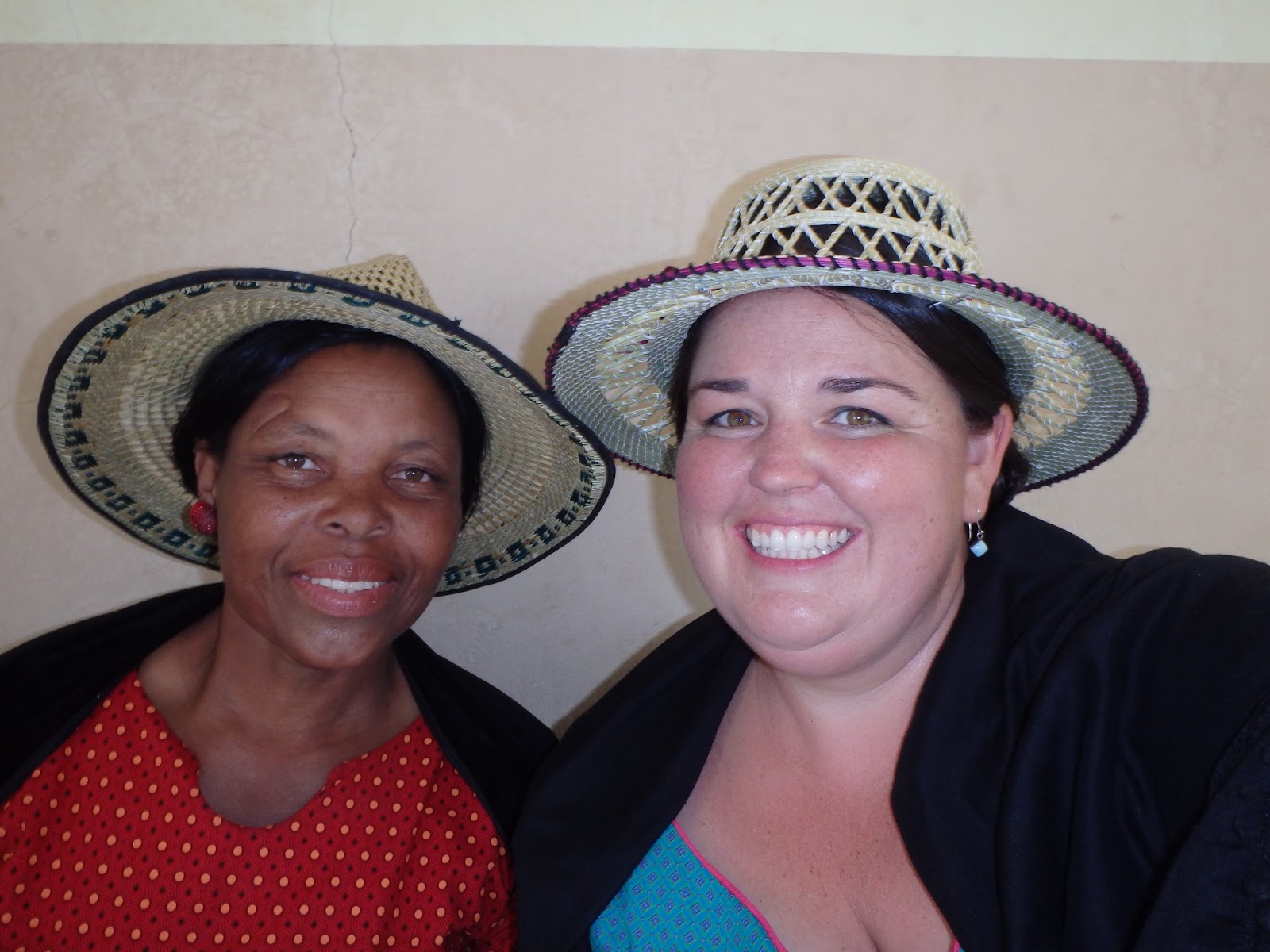
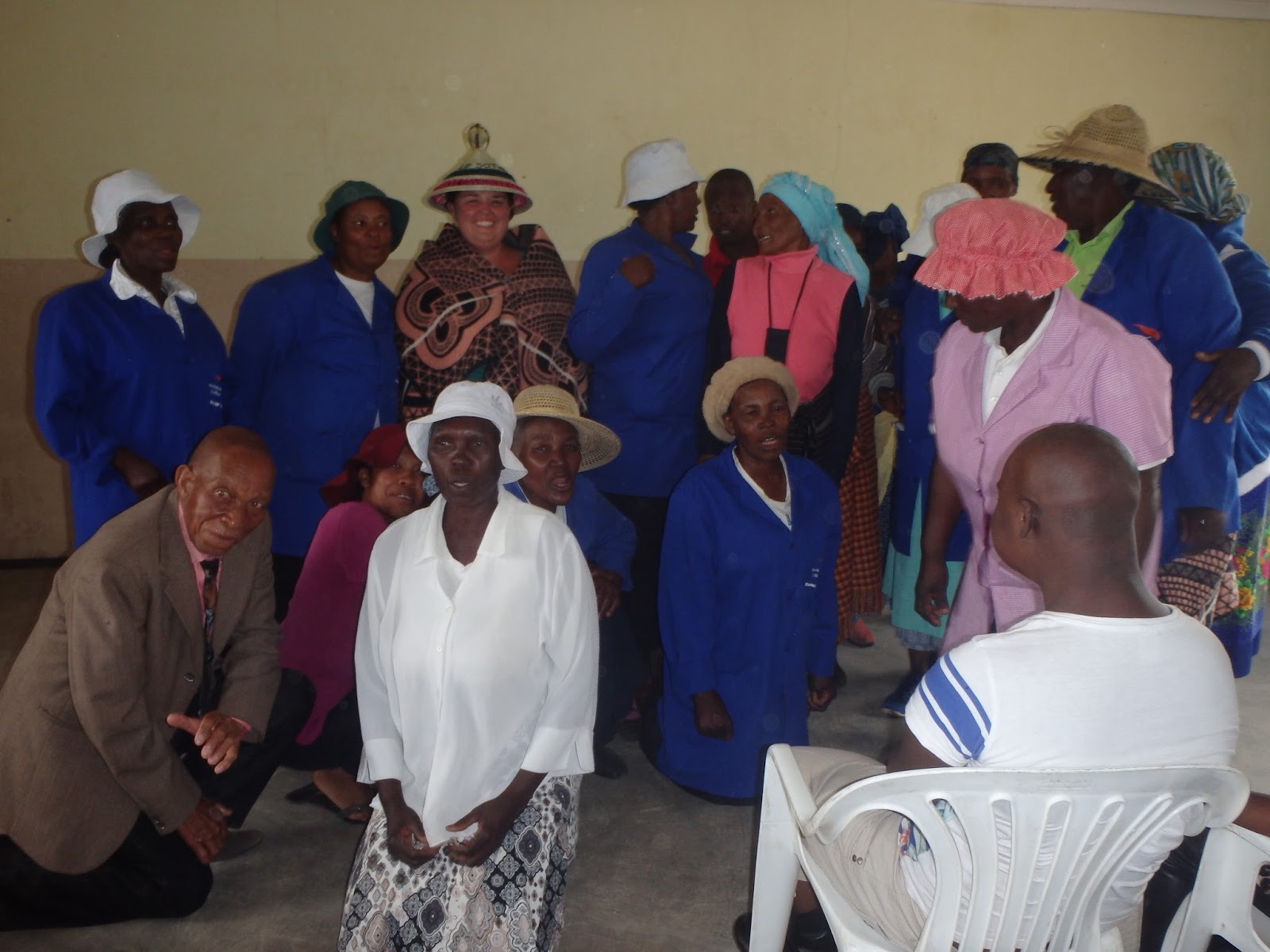
This week marked a week of transition as I moved from my beloved Ha Rasekila in Botha Bothe to my new site near the capital. A highlight of saying goodbye was the farewell ceremony that my organization gave me on Sunday. Here I am towards the end of the ceremony with members of MCCC in the kobo (blanket) and mokorotlo (traditional hat) that they gave me. I will have more on the ceremony itself in the near future, so stay tuned!

Thursday, November 17, 2016

Three Photo Thursday - 17 November

The time for goodbyes has begun. In ten short days, I will be leaving my beloved Botha Bothe and moving to my second site-nearer the capital and Peace Corps Office. The goodbyes this week began with my final Teen Club for HIV positive youth at Baylor's Pediatric AIDS clinic. After more than two years of monthly meetings, I am definitely going to miss these incredible, bright children. This photo is with Ausi Lerato, the program manager. Although I have some photos with the teens, in the interest of maintaining confidentiality, those are just for me! 

Friday, November 11, 2016

Ngoana oa Trump? (A child of Trump?)

"Whatever America hopes to bring to pass in the world
must first come to pass in the heart of America."

                             -Republican President Dwight D. Eisenhower
Hopping out of a car this morning, the driver turned to me and said, in Sesotho, "Uena, u ngoana oa Trump" or "You, you're a child of Trump."

I rolled my eyes and told him I was sad about the election. As I walked away, I nearly cried.

I have been in Lesotho for almost two and half years, serving the people of Lesotho and the government of America.

In 2014, I was here for what the US State Department defined as a "coup-like event". The military assisted in removing the Prime Minister from power, however, they did not claim control over the country. We PCVs were forced to sit around in South Africa for three weeks before we could return to our homes.

In 2015, I got to watch this small, peaceful, resilient country hold special elections. After a week of Basotho listening to the radio nonstop, coalitions were formed and a new part gained the top office.

The political situation here is still not perfect-no political situation is. Newspapers print headlines daily calling attention to drama within and among the top political parties. Even today there are stories of a possible peaceful change of power in the parliament.

All of this politicking, however, lives only in the political sphere. At no time have I heard a single statement about a single politician's personal attributes, home life, or families. Every comment I have heard has been strictly about their work, action, beliefs, and role in politics.

America, we could learn something from Lesotho. 

In 2016, the tables turned. Instead of me, the American, seeing Lesotho's electoral process, the people of Lesotho were watching America's political process...closely.

Thursday, November 10, 2016

Three Photo Thursday-10 November

As I mentioned on Monday, the Chicken House finally reached completion! Here is one happy Beth last Saturday when the cage installation was completed. The little red things are the drinkers. Once the chickens arrive, I will never again hang out under these cages!

Basotho girls and women carry water and other heavy things on their heads. The effort and neck strength training begins in childhood as girls mimic the women they see. Here my favorite twins and regular playmates were hanging out playing with 1L buckets while their grandmother and I discussed work. After using the buckets at seats, balls, and more, they started placing them on their heads. As soon as they could let go, they excited began calling for their grandmother's attention to show off how grown up they are. I love these two!

Friday, October 28, 2016

Three Photo Thursday-27 October


PCVL life has me at pre-service training a lot these days. As a result, I have gotten to know the newest Healthy Youth folks to come to Lesotho. It is really exciting to see the country I love through their eyes. As a group, they are incredibly experienced and passionate, which makes me eager to see what they will do over the next two years.

They also have an enthusiasm for little moments that I seem to have lost in my business. In the last two weeks, I watched one trainee reading his Kindle aloud to a group of young girls, another leading physical activities with older girls, and many leading little songs or games during their breaks. Pictured here is Veta, a trainee from California, leading a game with some of the children during their (and her) break.


Thursday, October 20, 2016

Three Photo Thursday-20 October

Boys raise their hands, eager to participate in the session on Power in Relationships and Consent.

I spent most of this week at Camp BRO Botha Bothe. My friend and the local Ministry of Youth representative organized this boys’ camp to promote gender equality and opened it up to participants from every single school in the district! It was an amazingly good time-and my favorite of the camps I have helped out at thus far in Lesotho. Come back on Monday for more on Camp BRO BB!

Emily rolling her first tortillas!
One of the best parts about Peace Corps’ Pre-Service Training is that we try to follow the Experiential Learning Cycle throughout the training process. For example, when trainees arrive in Lesotho, they move into a host family’s home and begin living like Basotho immediately. Then, in their language and culture sessions, they discuss what that is like before learning why things happen the way they do and reflecting on the experience. Another great example of this is called HVV or the Host Volunteer Visit. This week, all fifty-seven trainees visited currently serving volunteers to see how we live and work in our various communities. When they return to training, they will share and reflect on their experiences to gain a better idea of the life of Peace Corps Volunteers throughout Lesotho. My guest for the week was a trainee named Emily. The people in my village were-as always-thrilled to meet another volunteer and loved when she tested out her growing language skills by greeting them and discussing where she currently lives. Emily, in turn, loved the chance to learn how to cook like an American in Lesotho—especially how to bake on a stovetop and how to make tortillas!


Giving instructions to grade five in Sesotho and English.
As always, teaching life skills is a highlight of my week whenever I am at site. This week, sadly, I did not get to teach my oldest students as they have begun writing their nationalized exams to complete primary school. I taught the younger students about the physical changes that occur during puberty. In both grade four and grade five, the teachers were thrilled that I was discussing puberty with the children. In grade six, we had already covered puberty, so today we discussed HIV. Eleven students volunteered to pull an item out of my grab bag. They then had to explain to everyone else what that item had to do with HIV transmission. For the most part, they did a great job, however, I had them completely stumped when a boy pulled out a spoon. It was a trick item, as a spoon has nothing to do with HIV transmission-sharing silverware with or eating food prepared by an HIV positive individual will not transmit HIV and ensuring everyone understands that is just one way of trying to decrease stigma around HIV. 

Monday, October 17, 2016

The Exciting End of Secondary School

Hanging with Thabo and his best friend
Last year I promised my brother Thabo that if I stayed in Lesotho, I would attend his Form E Farewell. This is the local equivalent of a graduation ceremony; however, students finishing secondary school do not get a diploma as part of the ceremony. Typically the ceremony occurs just before the students begin writing their nationalized exams. If they pass these exams they will get a certificate showing they have completed secondary school. Graduation ceremonies are reserved for tertiary and university educations.

I was coming to the ceremony from the Peace Corps training village, so Thabo had arranged for one of his teachers to greet me and to store my backpack safely in the staff room for the duration of the event. Miraculously, my host mother, ‘M’e ‘Masekila arrived just after I took my seat and we were able to sit together.

Reading the program, I was surprised to see my brother was giving a speech!
As I looked at the program, I was both filled with pride and annoyed. My brother was giving a speech but had not told me about it! I had to learn it when I saw his name in the program. My pride only continued to grow when the Form E Boys Choir began performing and I realized he was leading the choir too!!

Thursday, October 13, 2016

Three Photo Thursday- 13 October

The Form E students singing during their celebration.
On Friday, I awoke before dawn and donned my party dress (literally). As early as possible, I was on a taxi leaving the Peace Corps training village bound for my brother Thabo’s Form E Farewell. Form E is the local equivalent of Senior Year. Instead of a graduation ceremony, schools do a Farewell Ceremony before the students write their exams. Their exams are nationalized and they must pass in order to earn the certificate (like a diploma). I had promised Thabo last year that if I was still in Lesotho, I would be in attendance for his ceremony. It was amazing. For six hours I watched students dance, sing, and give speeches before we ate a meal and headed home. It was my proudest moment in Lesotho thus far, however, I will discuss that more in Monday’s blog post!

Heather shows her awe at our waffle breakfasts...after enjoying a milkshake as a pre-breakfast treat!
A few weeks ago, I realized that inside my own head I was frustrated more often than usual and becoming more negative. I spent a walk stewing about it on my way to town and realized that since January 1st I had taken a total of three vacation days! That same morning I learned I was not needed for an activity I had promised to help with and another PCV mentioned he was headed to Clarens for that weekend. Within two hours of my realization, I had a mini-vacation trip to Clarens planned. Having been to Clarens for the other vacation days I took this year, I was not there to sightsee. I was there for amazing food, dark beer, my friends’ tattoos, and my own pedicure. For two days, that was all we did and it was exactly what I needed!

Finally! Burglar Proofing is Installed!
The week ended with some huge excitement. Only a week after giving me a quote for burglar proofing the chickenhouse, the third and final contractor we hired called to say that installation was happening…that day! I had to scramble to rearrange my schedule for the day-I was supposed to be finalizing things for the boys’ camp that was about to start-and then get back to my village from town. But, by mid-afternoon, the entire chicken house was finally burglar proofed. Considering my frustration less than two weeks earlier, this was an incredibly exciting turn of events.

Monday, October 03, 2016

Chicken Coop Construction: Burglar Bar Busts

Angry Beth waiting by windows clearly
devoid of burglar bars.
Six weeks ago, I excitedly paid the deposit to the second man intending to install the burglar proofing for our chicken coop. After the failed installation attempt in August-thanks to no electricity and no large generators available anywhere near my village-I was excited to be working with Buthe Buthe Aluminum and Glass, a business that appeared to be more professional and more established with an actual storefront, truck and generator of their own.

As we discussed the details, my new burglar bar man set dates to measure the windows and to install the burglar bars within the week. I cleared my calendar to accommodate the dates and was thrilled to think of how fast this business would be getting the work done.

Somehow, my hope lasted up until last Monday at 1:30. It was the eighth time in five weeks I had cleared a full day on my calendar for the burglar bar installation. It was the eighth time I called multiple times throughout the morning only to be told he would install on another day. Anticipating two weeks away from site for various Peace Corps work and the arrival of our chickens, I was done!

I firmly told him that he needed to do the installation as promised, that day. He, instead, offered me a refund of my deposit.

I grabbed my stuff and angrily stomped the thirty minute walk to get a taxi to town to collect my refund. Luckily I did not bump into anyone, as I was ranting and raving aloud the entire way out. When I arrived at his shop, the owner had “left for Maseru.”

“Oh no he didn’t,” I told the tiny woman manning the shop as I pulled out my phone. My stress level and anger were astronomical as I called him again. Many conversations occurred via phone between us and between him and the small woman. As my anger literally boiled over and caused liquid to leak from my eyes, the woman tried to help find a solution that would make me seem less upset. I finally agreed to leave the shop as he would be sending me money through my phone by evening.

Just about anyone could enter this house,
even crazy Americans without the keys.
With chickens due “in September”, my stress level was through the roof. Thanks to Butha Buthe Aluminum and Glass’s failure to actually do the work promised, chickens could arrive before cages or burglar protection are installed. That evening, my brother mistakenly asked about my day. As a result of me telling him the drama that had unfolded and my extreme frustration, I also taught him a new idiom: spitting nails. He and I both laughed about it.

A week later, I still did not have my deposit back. A large male PCV accompanied me in case I needed intimidation. I was much nicer than I would have been last week and managed to get my deposit back without resorting to intimidation or calling Peace Corp’s Safety and Security Manager. I am still a bit stressed but mostly am relieved that the chickens did not in fact arrive in September.


Meanwhile, the Peace Corps staff swept in to help me out. The staff that ensures the PCV homes are protected called up their guy and helped arrange installation of our burglar bars…hopefully this week. Somehow I am still optimistic despite the multiple failed attempts.

MCCC’s Egg Laying Chicken Project has been in development since March 2015. After many delays, MCCC and I were able to write a successful grant proposal for a VAST grant through Peace Corps. VAST grants are funded by PEPFAR to help with HIV-related work and OVC (Orphan and Vulnerable Children) care. It is due to MCCC’s work with OCVs that qualified us for the VAST grant. Otherwise, we would have applied for a PCPP [Peace Corps Partnership Program] grant and would have been asking for assistance in funding this grant proposal. I encourage you to consider supporting other PCPP projects.

Posts about this project include:

Monday, September 26, 2016

Making RUMPs

Sewing and posing all at once-a perfect Saturday afternoon!

I had only been in my village a few months when I noticed a girl in my neighborhood was at home one Monday. She was actively doing chores around the home, but she should have been at school. I asked why she was home and she smiled, telling me she was sick.

I was confused, as she appeared to be perfectly fine. We had the same conversation for another two days, with her still looking perfectly well. The fourth day, she was back at school. 
When I noticed her home again a few months later, I took advantage of my improving language skills and asked more questions. I learned that she was home because she was menstruating. As a single orphan (in Lesotho, single orphans have lost one parent, double orphans have lost both) with a father who works outside of Lesotho, she had no access to menstrual hygiene products and realistically, no money with which to buy them. 

This troubled me until I attend the LGL Summit in June. There I learned an inexpensive and easy way to RUMPs or Reusable Menstrual Pads. Since then, the women in my organization and I have been planning a time to make these with both women and girls in my community. 
One of the things I love about this particular pattern is it does not require special skills or materials. It uses only fabric, towels or other absorbent material, thread, a needle, and a button. The fabric and towel do not even have to be new, just clean, making it the perfect project for people with limited resources. 

The women of my organization and I have been planning this day for a few months, scheduling it for after most of work with the Chicken Coop Construction would be completed. Girls were asked to bring their own fabric, however, I supplied the other sewing materials thanks to my mom and RPCV Lisa supplying me with more sewing notions than I could ever use. 
Finally the day arrived and the fun began!

Step One:

Trace the pattern onto the material and cut it out. You need to copies. 

Step Two:

Hold the two cut pieces together, pretty side in. Place ribbon or material sewn into a strip near the top and bottom of the pad. Pin everything in place. 

Step Three:


Sew the two pieces of fabric together, but stop with a few centimeters not completed. Turn the work right side out and finish stitching. 

Step Three is best done with friends, conversation, laughter and music!

Step Four:

Sew a button on to one wing of the pad and a button hole on the other wing. 

Step Five:


Show off the completed work. The middle pad currently holds towel, to show how
these beautiful works of art with in fact work.

Posing with a pad-pride in accomplishments
and empowerment!
Strike a pose and show off your girl pride!


Monday, September 12, 2016

Two Years and Sixteen Volunteers


Fresh off the plane: June 5, 2014
Last week I highlighted the accomplishments of my Peace Corps training group in light of our work as defined by and reported to Peace Corps. Numbers of people reached in specific topics, however, only shares a small portion of our story.

One of my favorite things about the Healthy Youth program in Lesotho, is that each volunteer’s job responsibilities and activities are unique to their site. As a result, we worked in a number of areas, some overlapping and some unique to only one or two of us. Here is a sampling of the work that filled our days:

Health


  • Worked in a clinic to increase ARV adherence and infant wellness checks 
  • Weighed infants and worked with Village Health Workers in an outreach clinic
  • Started a growth monitoring and intervention program at an orphanage
  • Worked with three HIV+ Teen Clubs


Youth Development


  • Directed 6 overnight camps serving more than 425 girls and boys in six of Lesotho’s ten districts
  • Completed more than 20 Grassroot Soccer Interventions to educate on HIV prevention
  • Tutored herdboys in computer skills
  • Started and led Youth Clubs in Athletics, Gender Empowerment, Drawing, Games, English, and English Reading

PCV Stephanie and colleagues show off the produce at
the orphanage she worked with.
Photo provided by Stephanie Sales.

Income Generation to Support Families and OVCs


  • Two community-based sewing businesses
  • A farm including water accessibility for an orphanage
  • Started three chicken projects
  • An achaar project
  • Fenced a farm and orchard to protect product from cattle
  • Advised five agricultural co-operatives
  • Helped a women’s and girl’s weaving group with marketing and market development

Community Engagement


  • Planned  and led four World AIDS Day events including talent shows, voluntary HIV testing, 
  • Built a multi-purpose athletic court for one of Lesotho’s largest towns
  • Planned and led a Spread the Love, Not the Disease Valentine’s Day event with over 100 youth participants enjoying face painting, nutrition and fitness info, yoga, HIV testing, and Planned Parenthood
  • Hosted a large HIV awareness, testing, and education day for youth
  • Built a Community Building with a children’s library
  • Worked with Caregiver and OVC Support groups in four communities; building the capacity of caregivers 
  • Led a father’s support group through the Red Cross
  • Built small greenhouses with families and provided nutrition and gardening lessons to build food security

Education


PCV Eloise's students at the Khotsong Skills Training
Center, a tertiary school.
Photo provided by Eloise Williams
  • Started computer labs at 2 tertiary schools
  • Worked with a school to help it get internet access for students and teachers
  • Taught primary school classes in Life Skills, English & Creative Writing, and Dance
  • Taught Life Skills in secondary schools
  • Taught at 3 tertiary institutions


Lesotho 82 Peace Corps Volunteers and their counterparts at a workshop.


Thursday, September 01, 2016

Three Photo Thursday: 1 September

Spring is coming! The first recognition of this is already blooming beautifully in our yard: plum blossoms. The plum tree is always ahead of the peaches. It blooms weeks before them, with delicate and beautiful white blossoms. It also produces a month or two ahead of our peach trees. While Lesotho will soon be filled with bursts of pink color on the brown landscape, these white flowers are the first indication that winter is ending.

Considering how cold the weeks preceding these little flowers have been, I am really excited to see them bringing in warmer days!


I tried to pick the least gruesome photo to show this moment.
The week started out with our “pet” pig being slaughtered. This pig had been free range since winter began and there were no gardens to be destroyed. He had reached the point of trying to heel whenever we wandered around the yard or started out from the house. I am still not sure he realized he was a pig and not a dog, especially as he had a tendency to come running to kiss my leg every time I left the house.

This Sunday morning activity was not my first pig slaughter, however, it was the first time we slaughtered something larger than a chicken at our house. The boys and their uncle spent much of the morning working with the pig and later the meat. I then spent much of the later afternoon cutting up my portion of pork to make Five Spice Pork Tacos! Since I never cook meat at home, this was quite the treat!

Chatting it up with the amazing Lebo Mashile after her
inspiring poetry reading in Maseru. 
Throughout my 27 months in Lesotho, my cultural moments have been restricted to the local culture found in rural villages. Celebrating and learning traditional culture through Cultural Days or incredible moments like being thrust into the Litolobonya hut has been amazing. This week while in Maseru to help with preparations for the upcoming Pre-Service Training, a good friend invited me to attend a Poetry Festival.

Although excited, I was ill prepared for just how much I would love the experience. It was like coming home while still living in Lesotho! The night began with some young women performing their own poetry, switching comfortably between English and Sesotho while blowing me away with their stage presence. The headliner, Lebo Mashile from South Africa, really astounded me.


The month of August is women’s month and as such, Lebo performed a number of her poems centered around the realities of being a women. With lines like “Tell your story until your past stops destroying your future” and “There is a me that I could be, if I just let her breathe outside,” I found myself hanging on her every word. My friend and I had the chance to meet her after the show, where she admitted that this was the longest reading she had ever done. We very truthfully assured her we would have happily listened to her for another hour or two as she signed the book of poetry I had quickly purchased. The long forgotten English major in me ecstatic to delve further into the way that Lebo plays with words, meaning, and rhythm. 

Tuesday, August 23, 2016

Chicken Coop Construction: Weeks 5 and 6


Construction Completed!!
Week Five: We have completion! Well, construction completion anyway. Although the house is not yet ready for chickens to arrive, the roof is completed and well secured for its windy locale. Although I missed watching the team finish the house, I learned of their accomplishment before boarding my taxi to come home. Multiple people in town stopped me in my tracks; thrilled me to tell me that the chicken house was done and beautiful.

As my taxi crested the hill before our building site, I caught me breath eager to see the completed project. It looks wonderful!

Week Six: When week five started, a friend helped me schedule someone to install burglar bars in the house on Sunday of week six. In my head, with burglar proofing happening Sunday, the cages would also get installed this week.

Clearly I should not develop expectations, even when things are scheduled and we have asked a million clarifying questions in two languages.

When the man building and installing our burglar proofing arrived, we were all stunned. He was shocked to learn we do not have electricity in our village. Bo-‘M’e and I were equally blown away that he never mentioned needing electricity to complete his work.

As PCVs, we are supposed to work with host country nationals in all things. This is to build their capacity to do the work after we return home. In this case, I am grateful to have worked alongside women in my organization as otherwise I would have feared my language skills caused the confusion and delay.

Still waiting for burglar bars on these windows, but wow,
that roof is pretty!
One of the leaders in my organization and I had spoken to this man twice in person. The first time was when we were getting a quote for building supplies and pricing. He looked at the printed list of supplies and said we had everything we needed listed and priced his work. The second time we spoke was on the day that we bought the building supplies. Again, we checked to ensure we had everything as we did not want to have to hire a vehicle for later deliveries of building supplies. Again, he confirmed we had everything and he gave us his contact information.

I have an incredibly hard time understanding this man’s Sesotho, so it is possible that I would have missed any mention of electricity despite knowing the word. I was, however, working alongside ‘M’e ‘Majustice and a woman from the building supply store. ‘M’e ‘Majustice knows that we do not have electricity in our villages. She would have quickly jumped in had he suggested anything connected to moltakasa or use of a generator. I do understand her Sesotho. The woman from the store translated many of his words into English for me and I am certain this important fact would not have been ignored as much of our district does not have electricity.

As a result of this miscommunication, we spent two hours trying to find a generator for the following week. His job at the building supply store makes him only available to do the work on Sundays. He made it clear that we needed a large generator. When he looked at the first one we found, it was too small. We went to another family’s home to see their larger generator. Although larger than the first, it too was too small. Then he clarified the power of the generator we needed-double the first one we had looked at. As we walked back to my supervisor’s, I expressed concern that we may be unable to find one that large as our village does not have people rich enough to have such large generators and we do not have the money to rent one from somewhere else.

Before he departed for the day, I asked him to take a look at our supplies again, just to be sure that if and when he returns we actually have everything needed to do the job in one day. It turns out that we are missing square “tubing” to serve as the outside of the burglar door frame. We need to buy two sections. Apparently, checking the list when we were at the building supply store on two separate occasions did not highlight this important missing piece. Buying these now will require hiring a truck as they are too long to strap to the top of our taxis.
One of the women in my organization poses with the
completed chicken house before our meeting.

So now we have to figure out how to find a huge generator, buy oil and petrol for it, buy the two sections of square tubing, and hire a vehicle to deliver the tubing or we have to find a new person to do the work; one who can arrive with and by his own power. This lack of clarity looks to more than double the anticipated cost of burglar proofing the chicken house in addition to slowing us down.

Despite my frustrations with the man who was to do the work, I am surprisingly unfazed by the situation. Obviously, my expectations are shifting and I am becoming more accepting of the twists and turns in the project.

Bo-‘M’e and I visit numerous houses in multiple villages trying to secure a generator large enough for the project. We are unsuccessful, however, my visit to town to get new quotes from people with larger shops gets us a few reasonable quotes that come complete with transport, installation (including bringing their own generator), and the supplies. As predicted things will be twice what we estimated, but a careful look over the budget and remaining funds reassures me we can still afford this vital step in our project. 


MCCC’s Egg Laying Chicken Project has been in development since March 2015. After many delays, MCCC and I were able to write a successful grant proposal for a VAST grant through Peace Corps. VAST grants are funded by PEPFAR to help with HIV-related work and OVC (Orphan and Vulnerable Children) care. It is due to MCCC’s work with OCVs that qualified us for the VAST grant. Otherwise, we would have applied for a PCPP [Peace Corps Partnership Program] grant and would have been asking for assistance in funding this grant proposal. I encourage you to consider supporting other PCPP projects.

Posts about this project include: