Featured Post

U motenya!

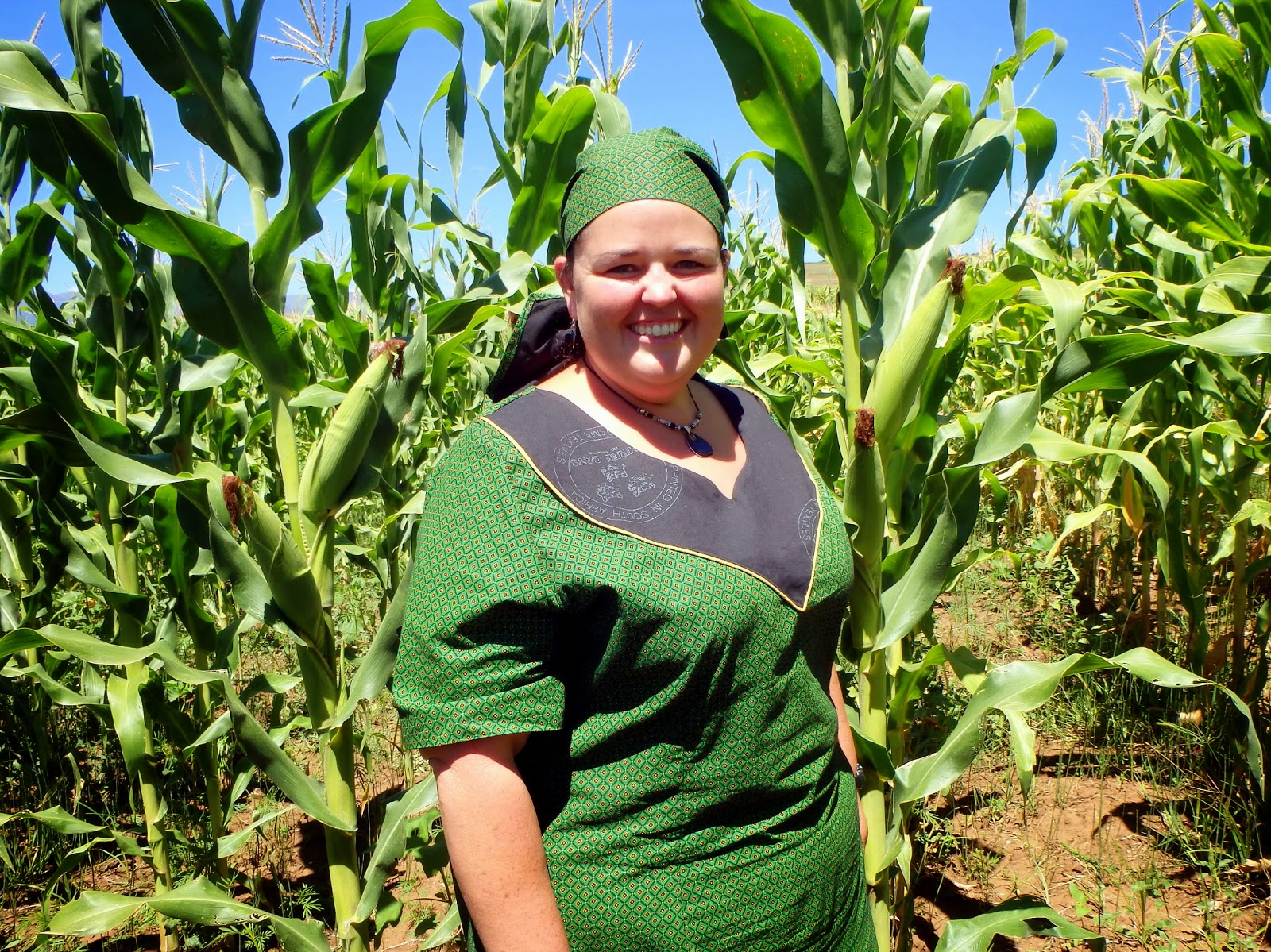
I leave my house for work and get called over by two village women awaiting their chance to do business with the chief. The first smiles...

Showing posts with label Blogging Abroad. Show all posts

Tuesday, November 22, 2016

Saying Goodbye Part 1

As I prepare to leave my village for the last two and half years; saying goodbye has become a regular part of my daily life.

There is no easy way in Sesotho or English to explain to my local friends and family just how much I will miss them when I depart. Last week I attended a community gathering and tried to say in words exactly how important the community is to me.


To translate for you, I said:

Monday, November 07, 2016

Chicken Coop Construction: COMPLETION!!!

Chicken house completion has finally happened...although two months became more than four, the house is completed and ready for the arrival of MCCC's 200 egg-laying chickens!!
The burglar bar completion finally happened a week after the third business owner gave me a quote. His staff was incredibly professional and efficient when they came to do the installation. They even helped fix a burglar bar on our hall while they were there! 
Burglar Bar installation-I had to see it to believe it!

The next week I had a momentary panic when the man we bought the chickens from called. When I ordered the chickens, he said the delivery would be happening in September. We were into the second week of October and still needed to finish the cages and buy chicken food. Before I answered, I was sure he was calling to tell me the chickens had arrived. Instead-to my great relief-I learned they would be arriving at the beginning of November! 

Ntate Tau adding drinkers to the chicken cages.
Over the next three weeks, every moment that I was not away to assist with Pre-Service Training for the newest members of Peace Corps Lesotho, I was working with Bo-'M'e to ensure we were ready. Ntate Tau, our chicken cage designer, returned a few times to install the chicken cages. His workdays were some of the most fun as we chatted extensively about numerous topics while he worked.

Thursday, November 03, 2016

Three Photo Thursday-3 November

Burglar Bars Make a Happy Beth!
After I wrote about the Burglar Bar Busts, I began to wonder if the chicken coop would ever be completed. Thanks to the help of the wonderful Peace Corps staff, we got connected with a true professional. Within a week of giving us our quote, the burglar bars were finally in place.

Now we are finished up a few things-like buying food and cage installation-before the chickens arrive. Then my work is done and the women in MCCC will really need to get to work!!!


You can make anything out of plastic bags-even jump ropes!
 I love walking through the village in the late afternoons when all the kids are out playing. On this day, I bumped into some of my favorite girls jumping rope using plastic bags they had re-purposed. I love the ingenuity of kids when pre-designed toys are not readily available!

Monday, October 24, 2016

Camp BRO Butha Buthe-Empowering Men in Gender Equality

Boys practice leadership by leading one another through a
minefield of over one hundred chairs.
It is Saturday morning. I stand up to add a few questions to my friend and fellow PCV Rachel's session on power in relationships and consent. 

She had started the session with a fantastic game in which some of the boys had all the power and the remaining boys were powerless; in this case, forced to do whatever the other boys told them to do. As her discussion wound down, it seemed like not everyone has followed the jump from their feelings during the game to the discussion in sexual relationships. 

I ask them why girls do not walk along near sunset. "Because they will be raped Madam," a bright young man named T'sepo tells me. I then ask why girls will travel longer routes to avoid bars or isolated areas. A multitude of boys jump in, replying, "They will be raped."

I explain that unwanted sex is painful-physically, mentally, and emotionally. I ask them if they want their mothers, their sisters, and their future wives living through something so devastating. I share that Lesotho has the third highest rate of reported rapes in the world. The boys quickly point out that most women do not report because they will be beaten, stigmatized, or even killed.

I remind the boys that they have been chosen as leaders for Camp BRO-Boys Respecting Others-and as leaders in their schools and communities, they are the ones with the power to change things.

I see nods of agreement with all these things until a boy in the front row politely asked, " But Madam, what if a girl is torturing me by wearing a short skirt?"

From there, the discussion gets lively as my Mosotho friend Julia and I try to encourage their discussion and open their minds.

Thursday, October 20, 2016

Three Photo Thursday-20 October

Boys raise their hands, eager to participate in the session on Power in Relationships and Consent.

I spent most of this week at Camp BRO Botha Bothe. My friend and the local Ministry of Youth representative organized this boys’ camp to promote gender equality and opened it up to participants from every single school in the district! It was an amazingly good time-and my favorite of the camps I have helped out at thus far in Lesotho. Come back on Monday for more on Camp BRO BB!

Emily rolling her first tortillas!
One of the best parts about Peace Corps’ Pre-Service Training is that we try to follow the Experiential Learning Cycle throughout the training process. For example, when trainees arrive in Lesotho, they move into a host family’s home and begin living like Basotho immediately. Then, in their language and culture sessions, they discuss what that is like before learning why things happen the way they do and reflecting on the experience. Another great example of this is called HVV or the Host Volunteer Visit. This week, all fifty-seven trainees visited currently serving volunteers to see how we live and work in our various communities. When they return to training, they will share and reflect on their experiences to gain a better idea of the life of Peace Corps Volunteers throughout Lesotho. My guest for the week was a trainee named Emily. The people in my village were-as always-thrilled to meet another volunteer and loved when she tested out her growing language skills by greeting them and discussing where she currently lives. Emily, in turn, loved the chance to learn how to cook like an American in Lesotho—especially how to bake on a stovetop and how to make tortillas!


Giving instructions to grade five in Sesotho and English.
As always, teaching life skills is a highlight of my week whenever I am at site. This week, sadly, I did not get to teach my oldest students as they have begun writing their nationalized exams to complete primary school. I taught the younger students about the physical changes that occur during puberty. In both grade four and grade five, the teachers were thrilled that I was discussing puberty with the children. In grade six, we had already covered puberty, so today we discussed HIV. Eleven students volunteered to pull an item out of my grab bag. They then had to explain to everyone else what that item had to do with HIV transmission. For the most part, they did a great job, however, I had them completely stumped when a boy pulled out a spoon. It was a trick item, as a spoon has nothing to do with HIV transmission-sharing silverware with or eating food prepared by an HIV positive individual will not transmit HIV and ensuring everyone understands that is just one way of trying to decrease stigma around HIV. 

Thursday, October 06, 2016

Three Photo Thursday-6 October


The luggage from half of the trainees
 Over the last two months, my role as a PCVL has had me making many treks to Maseru in order to help prep for Pre-Service training. As of this week, the new trainees have arrived and their adventure begins.

I spent their first few days in country helping to welcome them. This included casual conversations, unloading their luggage, and getting them through their orientation stations.

It is exciting to finally have these folks in country. I am looking forward to getting to know them better and making new friends. Nerd that I am, I am even more excited for their training!!


At the end of my orientation time, I accompanied the Healthy Youth trainees to their training villages. It was really fun to pull in, with horns honking, and see their new host families so excited to see them.

The women were ululating, blowing whistles, singing, and dancing with joy as they welcomed their trainees to the village.

It was fun to see this more than two years after my own welcome to Lesotho. After so long here, it seems so natural to see this level of excitement and noise when people are happy. When I first arrived it seemed foreign and novel. Similarly, the language and the songs which once seemed overwhelming is now normal as I listened to the conversations and sang along to the songs.

Often I ignore how different this was from my normal, as it has become my everyday. Watching it through the new trainees' eyes allowed me to realize how much I have grown and adapted since my first day meeting my first host family.


My brother Thabo leading his choir
Last year, as a Form D (grade 11) student, my brother told me about performing in the Form E celebration. He then asked if I would attend his Form E celebration in September 2016. I vowed that if I was in Africa, I would be there.

And so, on Friday, I found myself at his Form E celebration. It was more amazing than any other moment I have experienced in Lesotho thus far, probably because my Abuti Thabo is such an incredible young man.

I enjoyed music and dancing, listened to numerous speeches, and enjoyed lunch. Look forward to more on this great celebration in the next week!

Thursday, September 29, 2016

Three Photo Thursday-29 September

Back in January, one of my villagers began construction on her huge house. I mentioned it at the end of Constructing Dreams. For eight months, the walls sat, completed, waiting for the roofing process to begin. To roof a large cement block house like this first involves building up the walls anywhere the roof will by high, before actually attaching the roof.

I had begin to think I would not see the house completed, however, this week the roofing supplies arrived and workers began the roofing process. Here the workers are adding the cement bricks that will support the roof on their first day of work. 


Although harvest in Lesotho was months ago-in July-much of my family's maize is still sitting on the cobs waiting for my host mother to have time to remove it. She is simply too busy with work, caring for the boys, and church to also spend hours separating the dried corn from the cobs.

This week, however, my nkhono or grandmother came to help as the family needed to grind more maize into powder for papa.  She spent two days just sitting in the shade working away-occasionally yelling at the pig for trying to come and sneak some food. It was great to have her visit and a boon to my mother to have the help around the house.


Over the course of the political primary, many Basotho would ask me about the American election and when I would be returning to vote. Having watched a number of villagers who work abroad return home for their own special election in February 2015, their question made sense to me. In order to avoid voter fraud, Basotho must vote in person.


Those conversations have highlighted for me, yet again, how lucky I am to be American. Obviously, I would not be a US Peace Corps volunteer living in Lesotho if I were not American, but, that aside, I am able to vote from Lesotho with little hassle. I signed up for my absentee ballot early on in the primary process (although sadly, not early enough to cast my ballot in New Hampshire in January). From there, I simply waited until my town clerk emailed it to me. Forty-eight hours later I found myself researching the New Hampshire gubernatorial candidates and presto, I have voted…five Tuesdays before America goes to the polls. And, since there is no postal strike in South Africa this year, unlike in 2014’s election months, my ballot should make it home and get counted! 

Monday, September 19, 2016

U motenya!


I leave my house for work and get called over by two village women awaiting their chance to do business with the chief. The first smiles and asks how my work is going. The second smiles and says “Ke bona u ja hamonate,” (I see you eat well) while gesturing at her hips with her hands about a foot away from each side to denote my large hips.

I draw a deep breath and expel a fake laugh before agreeing and noting that I have also have lost 30 kilograms since arriving in the village. The first woman agrees with me. I wish them well and head off to work stewing over being told, yet again, that I am fat.
***

I am in pre-service training on the night before our first community meeting. My host mother explains to me in broken English that I will be wearing her kobo or blanket. She then says she wanted me to wear one of her dresses, “but, you are too fat!”
***

I walk into a store and get a big grin from a female clerk. “Ausi, u motenya!” (Sister, you’re fat!). As my grin fades, a male customer next to her enthusiastically agrees, “E, u motle!” (Yes, you’re beautiful).
***

A taxi conductor attempts to overload my row of the taxi, where is sit alongside two other larger women. We fit comfortably, until he tries to put a fourth person in our row. The woman next to me starts laughing and says, “Ntate, re batenya kau fela!” (Father, we are all fat!) She then looks at me and points first to the woman on her left, then herself, and finally to me repeating the word motenya while smiling.
***
I am at the Peace Corps Medical Office standing on the scale. The doctor glances at it as I point out I have lost over forty pounds since arriving in Lesotho. She smiles at me and says, "Don't worry, it doesn't show." I am crushed for hours until I realize she was reassuring me
***

Living as a fat woman in America is not easy. People write blogs and posts about this everyday. Other people make horrible disparaging comments about how terrible said writers are. American women are bombarded by images convincing them they need to lose weight and look a specific way to be considered pretty or beautiful or even just average. Clothing models are many sizes smaller than the average women and many stores only carry sizes up to twelve or fourteen despite the fact that the average American woman is a size 16 to 18

In Lesotho, women spend their energy worrying
about whether their body can do things, not if
it compares to a supermodel on TV.
After a lifetime of internalizing the buying of extended sizes, the struggling to find active clothing without buying men's clothes, the doctor's running routine vitals or lab work and being shocked at my healthy levels, and the strangers assuming I am a binging, inactive, and unhealthy human simply because I am obese (despite my career choices and personal hobbies proving otherwise), it has been a huge adjustment to live in a place where comments about size are constant and are...

...compliments.

In Basotho culture, a country where most rural people struggle to maintain a healthy and substantial diet year-round, being fat is a sign of good health.  When people are stopping me on the street to tell me I am fat, they are stopping to tell me I look healthy or beautiful. 

Knowing this, however, does not undo three decades of insults and microaggressions. More than two years living in this culture, however, does not stop my American brain from being crushed when someone says "U motenya." The American inside me still translates this to 

You're ugly...

You're lazy...

You're unworthy...


The person delivering the complement smiles and is oblivious to my inability to accept their compliment. Meanwhile, my fake smiles, fake laughter, and forced thank you work their way out as I negatively internalize their complement and proceed to spend the next two days trying to remind myself that they are celebrating my looks and my body, not demeaning them. 

The longer I am away from American standards, culture, and media, the more accepting I find myself being of other people's bodies. I look around me and see women of many sizes and shapes. Instead of seeing wrinkles, big booties, or small boobies, I see beauty. I marvel at the differences between the people I encounter and the uniqueness of them all. I celebrate it. 

I am nervous to return to an America that is incapable of doing the same. More than two years away from the stinging judgement of American culture, it still invades my brain with its negativity and self-doubt. I desperately want to keep my ability to celebrate others' diverse beauty. I desperately want to continue learning to accept compliments on my shape, size, and self without tearing myself down. I am just not convinced that is possible in the United States. 

Meanwhile, I joyfully continue to live in a culture where a villager stops me to voice concern that I'm unhappy as he can tell I have lost weight.


If you like this post, also consider reading Five Lessons From Basotho Women  and Top Ten Surprises After a Year as a PCV.

Thursday, September 15, 2016

Three Photo Thursday: 15 September

My host mother, grandfather, grandmother, and me after
church on Sunday. 
Church in Lesotho is no one-hour commitment. Although not Roman Catholic, when I attend church, I attend with my villagers, which typically means attending the small church at our local Catholic primary school.

This Sunday, however, took more initiative. Instead of attending church a ten minute walk away, we were headed to the large church an hour's taxi ride away...and the priest would be there. We were attending because my host mother was joining a group in the church named for St. Cecilia; the patron Saint of music.

Instead of the usual two to three hours of church, it lasted nearly five hours. After church, I learned most people bring lunch. Thankfully I had coffee and water to share as my grandparents shared their packed lunch with me.


A pamphlet given out
by police at a traffic stop
Police checkpoints are a regular part of car travel in Lesotho. The police check out the vehicle safety, the driver's license, the vehicle registration, or confirm that a taxi is not overloaded.

This week, as we pulled up to the usual checkpoint in Botha Bothe, a policewoman handed a pile of papers to the driver. After the last one made it to me in the back of the taxi, I was impressed to see this double-sided pamphlet about human trafficking. With the opposite side in Sesotho, the handout told people where to get help and how to avoid becoming a victim of trafficking. I had previously seen similar posters , but giving the information out to captive audiences in cars is brilliant.

It reminded how seriously the Lesotho Police take human trafficking. Last year as we were finalizing things for Camp GLOW, the police requested to come to the camp specifically to talk about human trafficking and how to avoid becoming a victim.


Peach Blossoms
After last week's Plum Blossoms, I almost did not share these beautiful pink flowers. They are simply too beautiful to not share.

Right now in Lesotho, peach blossoms are a bright and colorful sign that summer is coming. Since the rains have not yet begun, the rest of our landscape is still mostly shades of brown and sepia; which only makes the thousands of trees bursting with pink stand out that much more.

They are like our reward for wearing long underwear inside and out for most of July and August. Now, we get to complain that the sun is too hot while absorbing this beauty. 

Monday, September 12, 2016

Two Years and Sixteen Volunteers


Fresh off the plane: June 5, 2014
Last week I highlighted the accomplishments of my Peace Corps training group in light of our work as defined by and reported to Peace Corps. Numbers of people reached in specific topics, however, only shares a small portion of our story.

One of my favorite things about the Healthy Youth program in Lesotho, is that each volunteer’s job responsibilities and activities are unique to their site. As a result, we worked in a number of areas, some overlapping and some unique to only one or two of us. Here is a sampling of the work that filled our days:

Health


  • Worked in a clinic to increase ARV adherence and infant wellness checks 
  • Weighed infants and worked with Village Health Workers in an outreach clinic
  • Started a growth monitoring and intervention program at an orphanage
  • Worked with three HIV+ Teen Clubs


Youth Development


  • Directed 6 overnight camps serving more than 425 girls and boys in six of Lesotho’s ten districts
  • Completed more than 20 Grassroot Soccer Interventions to educate on HIV prevention
  • Tutored herdboys in computer skills
  • Started and led Youth Clubs in Athletics, Gender Empowerment, Drawing, Games, English, and English Reading

PCV Stephanie and colleagues show off the produce at
the orphanage she worked with.
Photo provided by Stephanie Sales.

Income Generation to Support Families and OVCs


  • Two community-based sewing businesses
  • A farm including water accessibility for an orphanage
  • Started three chicken projects
  • An achaar project
  • Fenced a farm and orchard to protect product from cattle
  • Advised five agricultural co-operatives
  • Helped a women’s and girl’s weaving group with marketing and market development

Community Engagement


  • Planned  and led four World AIDS Day events including talent shows, voluntary HIV testing, 
  • Built a multi-purpose athletic court for one of Lesotho’s largest towns
  • Planned and led a Spread the Love, Not the Disease Valentine’s Day event with over 100 youth participants enjoying face painting, nutrition and fitness info, yoga, HIV testing, and Planned Parenthood
  • Hosted a large HIV awareness, testing, and education day for youth
  • Built a Community Building with a children’s library
  • Worked with Caregiver and OVC Support groups in four communities; building the capacity of caregivers 
  • Led a father’s support group through the Red Cross
  • Built small greenhouses with families and provided nutrition and gardening lessons to build food security

Education


PCV Eloise's students at the Khotsong Skills Training
Center, a tertiary school.
Photo provided by Eloise Williams
  • Started computer labs at 2 tertiary schools
  • Worked with a school to help it get internet access for students and teachers
  • Taught primary school classes in Life Skills, English & Creative Writing, and Dance
  • Taught Life Skills in secondary schools
  • Taught at 3 tertiary institutions


Lesotho 82 Peace Corps Volunteers and their counterparts at a workshop.


Tuesday, August 23, 2016

Chicken Coop Construction: Weeks 5 and 6


Construction Completed!!
Week Five: We have completion! Well, construction completion anyway. Although the house is not yet ready for chickens to arrive, the roof is completed and well secured for its windy locale. Although I missed watching the team finish the house, I learned of their accomplishment before boarding my taxi to come home. Multiple people in town stopped me in my tracks; thrilled me to tell me that the chicken house was done and beautiful.

As my taxi crested the hill before our building site, I caught me breath eager to see the completed project. It looks wonderful!

Week Six: When week five started, a friend helped me schedule someone to install burglar bars in the house on Sunday of week six. In my head, with burglar proofing happening Sunday, the cages would also get installed this week.

Clearly I should not develop expectations, even when things are scheduled and we have asked a million clarifying questions in two languages.

When the man building and installing our burglar proofing arrived, we were all stunned. He was shocked to learn we do not have electricity in our village. Bo-‘M’e and I were equally blown away that he never mentioned needing electricity to complete his work.

As PCVs, we are supposed to work with host country nationals in all things. This is to build their capacity to do the work after we return home. In this case, I am grateful to have worked alongside women in my organization as otherwise I would have feared my language skills caused the confusion and delay.

Still waiting for burglar bars on these windows, but wow,
that roof is pretty!
One of the leaders in my organization and I had spoken to this man twice in person. The first time was when we were getting a quote for building supplies and pricing. He looked at the printed list of supplies and said we had everything we needed listed and priced his work. The second time we spoke was on the day that we bought the building supplies. Again, we checked to ensure we had everything as we did not want to have to hire a vehicle for later deliveries of building supplies. Again, he confirmed we had everything and he gave us his contact information.

I have an incredibly hard time understanding this man’s Sesotho, so it is possible that I would have missed any mention of electricity despite knowing the word. I was, however, working alongside ‘M’e ‘Majustice and a woman from the building supply store. ‘M’e ‘Majustice knows that we do not have electricity in our villages. She would have quickly jumped in had he suggested anything connected to moltakasa or use of a generator. I do understand her Sesotho. The woman from the store translated many of his words into English for me and I am certain this important fact would not have been ignored as much of our district does not have electricity.

As a result of this miscommunication, we spent two hours trying to find a generator for the following week. His job at the building supply store makes him only available to do the work on Sundays. He made it clear that we needed a large generator. When he looked at the first one we found, it was too small. We went to another family’s home to see their larger generator. Although larger than the first, it too was too small. Then he clarified the power of the generator we needed-double the first one we had looked at. As we walked back to my supervisor’s, I expressed concern that we may be unable to find one that large as our village does not have people rich enough to have such large generators and we do not have the money to rent one from somewhere else.

Before he departed for the day, I asked him to take a look at our supplies again, just to be sure that if and when he returns we actually have everything needed to do the job in one day. It turns out that we are missing square “tubing” to serve as the outside of the burglar door frame. We need to buy two sections. Apparently, checking the list when we were at the building supply store on two separate occasions did not highlight this important missing piece. Buying these now will require hiring a truck as they are too long to strap to the top of our taxis.
One of the women in my organization poses with the
completed chicken house before our meeting.

So now we have to figure out how to find a huge generator, buy oil and petrol for it, buy the two sections of square tubing, and hire a vehicle to deliver the tubing or we have to find a new person to do the work; one who can arrive with and by his own power. This lack of clarity looks to more than double the anticipated cost of burglar proofing the chicken house in addition to slowing us down.

Despite my frustrations with the man who was to do the work, I am surprisingly unfazed by the situation. Obviously, my expectations are shifting and I am becoming more accepting of the twists and turns in the project.

Bo-‘M’e and I visit numerous houses in multiple villages trying to secure a generator large enough for the project. We are unsuccessful, however, my visit to town to get new quotes from people with larger shops gets us a few reasonable quotes that come complete with transport, installation (including bringing their own generator), and the supplies. As predicted things will be twice what we estimated, but a careful look over the budget and remaining funds reassures me we can still afford this vital step in our project. 


MCCC’s Egg Laying Chicken Project has been in development since March 2015. After many delays, MCCC and I were able to write a successful grant proposal for a VAST grant through Peace Corps. VAST grants are funded by PEPFAR to help with HIV-related work and OVC (Orphan and Vulnerable Children) care. It is due to MCCC’s work with OCVs that qualified us for the VAST grant. Otherwise, we would have applied for a PCPP [Peace Corps Partnership Program] grant and would have been asking for assistance in funding this grant proposal. I encourage you to consider supporting other PCPP projects.

Posts about this project include:

Wednesday, August 10, 2016

Chicken Coop Construction: Weeks 2-4

Week Two:
The view from the door includes a...floor!
Although I was away from site for the second week of construction, the building team was eager to move forward. Unfortunately, as they prepared to begin putting on the roof, they discovered we did not have enough cement bricks remaining to elevate the high side of the roof.

They send me a message letting me know and attempted to get the women in my organization to come up with a solution. Bricks and other building supplies are, apparently, an exception to the Basotho tradition of borrowing things that are needed. As a result, no bricks could even be ordered until the morning I returned, five days after it was determined we needed fifty more bricks.

The guys did break with building tradition though, pouring the concrete floor even though the roof was not yet in place. They even created a step up to the door, which was a pleasant surprise for me.

Week Three:
Week Three started with me buying more bricks. When asked, the brick-makers assured me that they would deliver within the week, but probably on Monday. This would mean that the work could be completed on either Monday or Tuesday. My host brother and I stressed the importance of receiving the bricks as soon as possible so we could finish work before he and other students had to return to school.

Constructing the beams for the roof
Mother Nature decided to surprise Lesotho with precipitation on both Monday and Tuesday, so the bricks never materialized. Throughout the week, we kept an eye out for them. Finally, on Saturday afternoon, they arrived.

Week Four:

Although I was at (another) Peace Corps workshop in anticipation of the upcoming Pre-Service Training, the team got to work after the bricks arrived. When I returned home on Friday, I hopped out at the building site to check in and see their progress.

Surprisingly, the fifty bricks I bought two weeks earlier were not actually enough to finish things up. I learned that we would need 32 more bricks! Anticipating another long walk to the brickyard and a lengthy delay waiting for delivery, I was a disappointed.

Our need for only these 35 bricks had the potential to slow
the project down by another week or two!
I stopped by my supervisor’s house and spoke with the MCCC members there. We started brainstorming people in the village who might have some extra bricks we could buy instead. By the time I left, my supervisor had agreed to ask her son if we could buy his. Saturday morning, I headed over to learn if I needed to hoof it to the brickyard before they closed at one.


Thankfully, my supervisor’s son was thrilled to sell us 35 bricks he had leftover from a previous project. He kept telling me that I was actually helping him more than he was helping us (lies!). As a result, Week Five will dawn with a Sunday workday and the guys anticipate being done by Tuesday afternoon. 


MCCC’s Egg Laying Chicken Project has been in development since March 2015. After many delays, MCCC and I were able to write a successful grant proposal for a VAST grant through Peace Corps. VAST grants are funded by PEPFAR to help with HIV-related work and OVC (Orphan and Vulnerable Children) care. It is due to MCCC’s work with OCVs that qualified us for the VAST grant. Otherwise, we would have applied for a PCPP [Peace Corps Partnership Program] grant and would have been asking for assistance in funding this grant proposal. I encourage you to consider supporting other PCPP projects.

Posts about this project include:

Friday, July 22, 2016

Chicken Coop Construction Day Five

The written plan for the chicken house.
The walls are done. The guys finished the third wall in only two hours, before tackling the windows on the back wall.

They decided not to use the lintels we bought to go above the door as the steel doorframe will provide enough support for the bricks above the door. They then humored me into adapting the plan for the back windows. Instead of three equally sized 0.7 meter wide windows, we now have two 0.7m windows framing a 1.3m window.

Give than chickens need ample sunlight in order to lay well, I am excited by the new plan. We will end up two 0.9m lintels leftover, but at least that is less wasted money than if we did not use the larger ones.

Since I will be working my PCVL role with Peace Corps while the guys finish the roof and floor, Abuti Sama and I took a few minutes to go over the location of the supplies. When I return from facilitating an In Service Training for other volunteers and their counterparts, construction will actually be done!


From there, we will arrange for someone to burglar proof the windows and door. The cage builder will return to finish things. Then, we go to the Ministry of Agriculture to order our 200 chickens.

Before the chickens arrive, which can take up to two months, we have a few other things to do. Although we have already done initial business and accounting trainings, we are going to do more specific budgeting training. It is vital that the women in MCCC budget and save to buy feed and medicine every three months as well as new chickens annually.

Goofing off with my brother Thabo on the job site.
I would like to see them plan ahead as to how they intend to use their income in helping the OVCs [Orphans and Vulnerable Children] in our community. Ideally they will do so proactively instead of reactively. I am relieved to be staying at this site for the first quarter of my third year to help make these things happen!


MCCC’s Egg Laying Chicken Project has been in development since March 2015. After many delays, MCCC and I were able to write a successful grant proposal for a VAST grant through Peace Corps. VAST grants are funded by PEPFAR to help with HIV-related work and OVC (Orphan and Vulnerable Children) care. It is due to MCCC’s work with OCVs that qualified us for the VAST grant. Otherwise, we would have applied for a PCPP [Peace Corps Partnership Program] grant and would have been asking for assistance in funding this grant proposal. I encourage you to consider supporting other PCPP projects.

Posts about this project include:

Thursday, July 21, 2016

Chicken Coop Construction: Day Four

“E felile” (aye fay-dee-lay) the grandfather of half the work crew says after lunch. Throughout the afternoon, as building continues, various people walk by repeating that same statement: “E felile,” or “It is finished.”

As Day Four closes, two sides and all four corners are completed. The walls will be done on Day 5. It is nearing completion, but it is not finished.

The morning and early afternoon were centered on the front face of the building. The guys’ fast pacing slowed due to the transitions to scaffolding and windows.

With only two men able to build at a time, the guys on the ground had more idle time to distract themselves. This gave me even more opportunity to jump in; lifting bricks above my head to my friend on the scaffolding.

The laid back attitude of the builders surprised me. Just as they finished the brick layer before the windows began, I asked how many bricks high the window openings would be.

Apparently in all our planning discussions, this never came up. I had been assuming they would be three bricks high while my friend was envisioning them as two bricks tall. He promptly removed bricks he had just cemented with no sarcasm or irritation. I expected at least a trace of annoyance but there was none to be had, reminding me how Basotho culture is incredibly accepting of things happening differently than planned or expected, especially compared to American culture.

The windows really slowed things down as nearly every brick surrounding them had to be cut just so in order to fit. While Abuti Sama trusted the other guys to split the half bricks by the door, he clearly did not have the same level of faith for the specific ones needed by the windows. He carefully measured and split bricks in half horizontally and took out perfect corners, all without wasting a single brick. His experience is obvious in all his efforts, as is that of his cousin (the other primary builder).

I cannot help but laugh at the expectations I awoke with on Monday. Day Four is done and we still need one more full day to do the walls, another two for the roof and floor. My expectations were not of my own making. I was told a week at most including the roof and floor. But, when Abuti Sama built his house, which is larger, they had the walls done in 1.5 days. Why did this “simpler” house take longer?
                1) It is winter. Abuti Sama built his house six months ago when the community and sun are awake at four am and dusk is at nine. Right now, the sun rises at seven and sets at six; making the workday five to six hours shorter.

The guys bring bricks uphill from the community building
to the building site, 5-7 at a time.
                2) The team…It was a team of five to seven experienced friends who were all home for the holidays who helped with his house. The process, with such experiences guys who are used to working together, is understandable faster than two experienced guys with five helpers to assist with moving bricks and mixing cement. Our team has been great, willing to work long and hard for their breakfast and lunch, but they are slower than the well-greased team he built his own house with.


Bo-'M'e watch the men working, thrilled to see the chicken house "finished".

MCCC’s Egg Laying Chicken Project has been in development since March 2015. After many delays, MCCC and I were able to write a successful grant proposal for a VAST grant through Peace Corps. VAST grants are funded by PEPFAR to help with HIV-related work and OVC (Orphan and Vulnerable Children) care. It is due to MCCC’s work with OCVs that qualified us for the VAST grant. Otherwise, we would have applied for a PCPP [Peace Corps Partnership Program] grant and would have been asking for assistance in funding this grant proposal. I encourage you to consider supporting other PCPP projects.

Posts about this project include:

Wednesday, July 20, 2016

Chicken Coop Construction: Day Three

As work began, I found myself pumping 200L of water with two of the women in MCCC. Yesterday, the youth club pumped and carried 250L to the building site before they begged off to finish practicing for their upcoming dance performance.

When we finish, I help unload bricks from the wheelbarrows. Each brick being used is being loaded in front of the community building and pushed uphill to the future chicken house. I am not sure why the bricks were delivered at the community building, instead of the construction site, but it has not been that awful to move them five or six at a time. Then again, I am not pushing the wheelbarrows…

A highlight of the morning was seeing the door put into place. The height of the door provides a great sense of perspective that the walls alone did not.

The door is in place and propped up with trees until
it becomes cemented in place.
Work proceeds at an even pace. The only interruptions come when various villagers approach. One man pesters me for a job. I try to explain that we do not have any money, which he refutes with the physical evidence of our building supplies. We are halfway through construction, the team does not seem to want more help, and in all honesty, we do not have any extra money. Although he has a beer belly, I still feel a mixture of guilt and annoyance repeatedly refusing while remembering ‘M’e ‘Majustice’s comment about the hungry man the day we bought our building supplies. After over an hour, he leaves with a smile and I feel less awkward.


The women carrying 20L of water each from the water pump
marked by the big square tower in the down the hill.


My “soft hands” are less of a hindrance today, most likely due to the guys getting tired of moving the bricks. They still comment on and marvel at them, but they allow me to help significantly more.


MCCC’s Egg Laying Chicken Project has been in development since March 2015. After many delays, MCCC and I were able to write a successful grant proposal for a VAST grant through Peace Corps. VAST grants are funded by PEPFAR to help with HIV-related work and OVC (Orphan and Vulnerable Children) care. It is due to MCCC’s work with OCVs that qualified us for the VAST grant. Otherwise, we would have applied for a PCPP [Peace Corps Partnership Program] grant and would have been asking for assistance in funding this grant proposal. I encourage you to consider supporting other PCPP projects.

Posts about this project include:

 Workshop Woe, Busiest of Birthdays, Checking Out Chickens, A Day with Bo-’M’e, Chicken Coop Construction Day One, Day Two, Day, Three, Day Four, Day Five

Tuesday, July 19, 2016

Chicken Coop Construction: Day Two

The walls are growing, albeit more slowly than any of us anticipated. Building started “on time” at nine, but the first few hours were a methodical exercise in precision as the two lead builders checked angles and levels repeatedly.

Once the base layer was in place, the pace picked up dramatically. The next three layers of bricks taking the same amount of time as the first one.

Abuti Sama cuts the plastic to
the correct size.
The glitch of the day was minor. I was asked for the roll of black plastic that acts as a moisture barrier. I proudly pulled out the giant 3m by 30m plastic we bought…only to learn the hundreds I spent was for naught; I should have purchased a roll of 15cm-wide black plastic for less than fifty Maloti.

The miscommunication showed itself as my friend and I discussed what he told me before I went to the supply store. When he described the plastic, he said it was “for the floor” so I bought enough to cover the entire floor. What was actually needed was to go around the edge of the floor. Out came a hacksaw and we cut the edge of my giant roll to achieve the needed dimensions. Internally I lamented the waste of money until my friend told me we would use the plastic on the floor too, since we have it.

At lunch time, the man building out chicken cages delivered. They do not look like much yet, but he will return in a few weeks to install them with feeders, drinkers, and tubing to fill the drinkers.

Watching the precision and craft that went into making everything level and strong, I feel much better about paying the builders today.

I spent the day trying to help. Women do not typically help in construction, so my efforts were not always encouraged. The guys, most of whom are my friends and one is my brother, would tease me until I jumped in to load, unload, or carry the bricks. Then, they would stop me, telling me I am strong my hands are too soft.

Sometimes I wish these guys could have seen me sail. 


The chicken coop at the end of day two.


MCCC’s Egg Laying Chicken Project has been in development since March 2015. After many delays, MCCC and I were able to write a successful grant proposal for a VAST grant through Peace Corps. VAST grants are funded by PEPFAR to help with HIV-related work and OVC (Orphan and Vulnerable Children) care. It is due to MCCC’s work with OCVs that qualified us for the VAST grant. Otherwise, we would have applied for a PCPP [Peace Corps Partnership Program] grant and would have been asking for assistance in funding this grant proposal. I encourage you to consider supporting other PCPP projects.

Posts about this project include:
Workshop Woe, Busiest of Birthdays, Checking Out Chickens, A Day with Bo-’M’e, Chicken Coop Construction Day One, Day Two, Day, Three, Day Four, Day Five